Commission hears Solar Rights Act guidance: permits cannot be denied, aesthetics may be reviewed under Standards 9 and 10
Loading...
Summary
Assistant Director Ashley Atkinson briefed the commission on the California Solar Rights Act and Secretary of the Interior Standards 9 and 10. Staff said jurisdictions may not deny permits but may request alternative configurations that do not increase cost or reduce efficiency beyond a 10% threshold under Civil Code Section 714.
Assistant Director Ashley Atkinson led a workshop summarizing state guidance on solar installations affecting historic properties.
Atkinson explained that the State Office of Historic Preservation guidance and the California Solar Rights Act do not allow jurisdictions to deny a solar panel permit outright. Instead, local review can assess whether rooftop installations meet Secretary of the Interior Rehabilitation Standards Nos. 9 and 10, which emphasize that new work should not destroy character-defining features and should be removable in the future without impairing the property’s integrity.
Commissioners discussed practical options to preserve visual character, including asking applicants to provide alternative configurations that place panels on non-street-facing elevations or outbuildings. A commissioner noted a civil-code limitation on imposing restrictions that substantially increase cost or reduce system efficiency; Atkinson read guidance defining “reasonable restrictions” as those that do not increase cost or reduce efficiency by more than 10% (California Civil Code Sec. 714 language was cited).
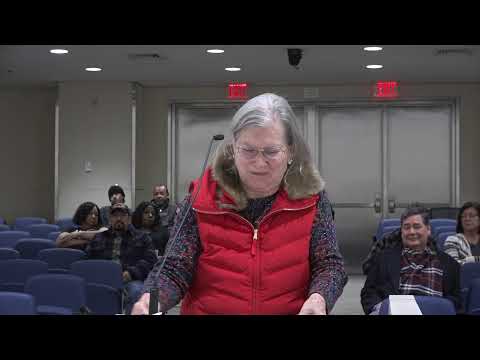
Public-commenter Edward Madrono suggested the city produce a publication to guide solar installations on historic boulevards. Commissioners and staff agreed the municipal code review subcommittee (when formed) or ARC subcommittee could develop guidelines or design standards to balance historic integrity and solar needs.
Next steps: Staff will bring future landmark solar applications to the relevant subcommittee and consider drafting local guidance or code edits.