Get Full Government Meeting Transcripts, Videos, & Alerts Forever!
Get email alerts on the Vicious Dog topic
No spam. Unsubscribe anytime.
Cascade council affirms 'vicious' designation after heated public hearing
Summary
After hours of testimony from the dogowner and neighbors, the Cascade City Council voted to classify a German shepherd as "vicious," citing public-safety concerns; the owners said they were not given required written notice and asked the council to overturn the designation.
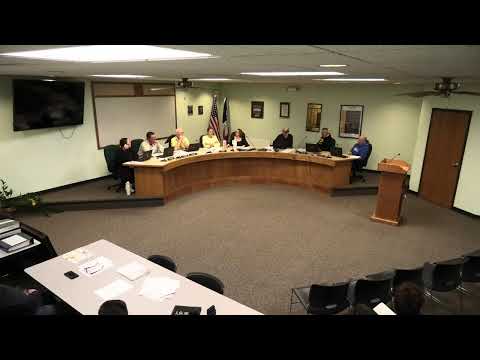
Cascade City Council voted on Nov. 24, 2025 to classify a neighborhood German shepherd as "vicious" after an extended public hearing in which the dog's owners and several neighbors presented conflicting accounts.
The motion to declare the dog vicious was made by Council Member Delaney and seconded by Council Member Oliphant. The roll call recorded in the transcript shows Oliphant — Aye; Weber — Aye; Hush — Nay; Gail — Aye; Delaney — Aye; presiding official — Aye. The motion carried.
The owners, who identified themselves in the meeting as Molly Pecoric and her partner Cole Huffman, said the city's handling of the matter lacked due process. Pecoric told the council that the first incident occurred in June when a neighbor approached her husband and the dog "nipped" at the neighbor's shirt. She said a second incident on July 3 resulted in a bruise and later a hematoma for the neighbor, but she said Cascade police were not on duty that day and the Dubuque County Sheriff's Department handled the response. Pecoric said she offered to pay medical expenses, quarantined the dog per state law, and that no further reports occurred for months.
Pecoric said the family cooperated and moved to a home with a fenced yard; she alleged that the city did not provide required written notice under city ordinance 4-1-10 and that the police chief contacted the family's insurance agent without permission. She asked the council to overturn the designation and allow the dog to remain in Cascade City limits.
Neighbors and other residents told a different story. Several witnesses said they had seen or been affected by aggressive behavior from the dog, and multiple speakers urged the council to prioritize child safety in the nearby Oak Hill neighborhood, which residents said has heavy pedestrian activity and many children. Tim O'Connell told the council the new fence appeared to be 4 feet tall and said, "I do not want my 7 year old or my 3 year old exposed to this dog." Zach Fagan cited online guidance recommending a minimum 5-foot fence for German shepherds and urged stricter containment if the animal were allowed to remain in town.
Police chief Fred (recorded in the transcript as Chief Fred Heim) told the council he had seen photos of the July injury (which are the subject of separate litigation) and said the wound required medical treatment and antibiotics. Chief Fred said he had advised the owners earlier to remove the dog from city limits to ease neighborhood tensions.
Council members debated whether the dog could be kept as a "guard dog" under the city's animal-control provisions if it remained inside a fixed enclosure with required signage, and whether higher fencing or other containment measures would address the risk. Several council members emphasized the ordinance language that permits keeping a vicious animal in a fixed enclosure but noted the liability if the animal gets out.
After hearing multiple personal accounts and asking questions about ordinance requirements and fence height, the council voted to designate the dog as vicious. Council discussion and public comment made clear the decision balanced competing concerns: the ownersassertion that the dog had been provoked and that procedures were not followed, and neighborsunease about the risk to children in the neighborhood.
The council's action included a suggestion by some members that the owners seek placement for the dog outside city limits if that were practical; one council member also invited any family or other parties outside town who could rehome the dog to come forward.
The next procedural steps following a designation typically depend on the ordinance's enforcement provisions (for example, removal or conditions for keeping an animal designated as vicious); the owners asked the council to overturn the finding and cited ordinance 4-1-10 and 4-1-9 in their appeal. The transcript does not record a subsequent council directive to staff for follow-up reports or a re-hearing date.
What happens next: the council's vote established the designation on the record; owners and neighbors may pursue the remedies or appeals available under city code or through civil litigation. The city did not announce any immediate administrative rehearing date at the meeting.