
Infants’ anatomy, rising bronchiolitis admissions raise questions about San Diego pediatric system readiness
Get AI-powered insights, summaries, and transcripts
Subscribe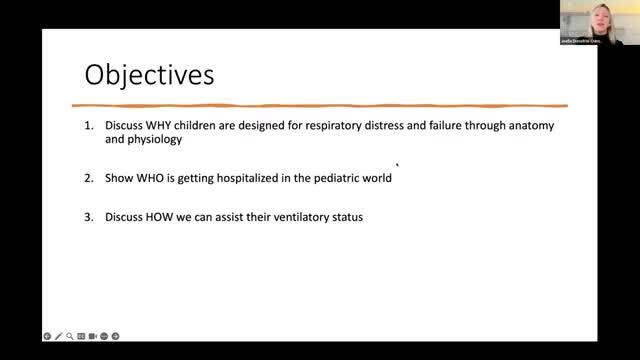
Summary
Dr. Joelle D'Onofrio Odeman told a San Diego EMS lecture that infants’ airway and lung physiology sharply increase their risk of respiratory failure, driving hospital admissions and interfacility transfers and prompting questions about EMS and hospital readiness, equipment and protocols.
Dr. Joelle D'Onofrio Odeman, an associate professor at UC San Diego and the EMS medical director for pediatric care at Rady Children’s Hospital, told a County of San Diego EMS lecture that neonates, infants and toddlers are physiologically predisposed to respiratory failure and often require systems-level solutions rather than only invasive procedures.
"Neonates, infants, and toddlers are designed for respiratory failure," D'Onofrio Odeman said, summarizing the lecture's central finding and linking anatomy to clinical outcomes.
Why it matters: Dr. D'Onofrio Odeman said bronchiolitis is the leading cause of pediatric hospitalizations and ICU stays and that respiratory causes account for roughly 35 percent of pediatric admissions in the data she cited, compared with about 15 percent for ingestion and poisoning. That pattern, she said, produces high interfacility transfer rates to regional children's hospitals and raises questions about whether local EMS and emergency departments are prepared.
Key facts and physiology: The lecture outlined several anatomical and physiologic contributors to pediatric respiratory vulnerability. Infants have a relatively large occiput and tongue, a floppy omega-shaped epiglottis and a higher, more anterior larynx that can complicate airway management. Alveolar development, she said, matures around 36 weeks gestation but continues through early childhood, leaving preterm infants with immature lungs and higher risk of respiratory complications. She emphasized that infants consume more oxygen per kilogram (cited as roughly double adult per-kg consumption), which contributes to faster desaturation during apnea.
Systems concern and readiness: D'Onofrio Odeman pressed attendees to consider system-level responses—EMS equipment, destination protocols, ED management pathways and QA processes—rather than focusing solely on endotracheal intubation. She noted a 2025 national EMS pediatric readiness survey is being interpreted and called attention to the upcoming National Pediatric Readiness Project survey in March as a chance to evaluate local hospital readiness.
Research and data limitations: The speaker described an in-progress analysis using 2019 NEMSIS data and hospital discharge diagnoses (work with ESO) that found potential underuse of CPAP/BiPAP in children and mismatches between EMS primary impressions and eventual hospital discharge diagnoses. She warned that these findings are preliminary and some questions remain about whether differences are due to coding choices, education gaps, or protocol design.
What comes next: The talk concluded by urging local hospitals and EMS agencies to inventory pediatric-ready equipment, adopt objective severity scoring and transfer criteria, and participate in readiness assessments. D'Onofrio Odeman said Rady Children’s has previously shared treatment pathways and that renewed dissemination via the EMS for Children advisory committee is under consideration.