FSEC launches redesigned website search; e‑programmatic and GIS tools coming in January
Summary
FSEC demonstrated a redesigned public website with improved search, tagging and interconnected content; staff said an e‑programmatic site and resource‑sensitivity GIS tool supporting the transmission programmatic EIS will be available in January 2026 with a live demonstration planned for February.
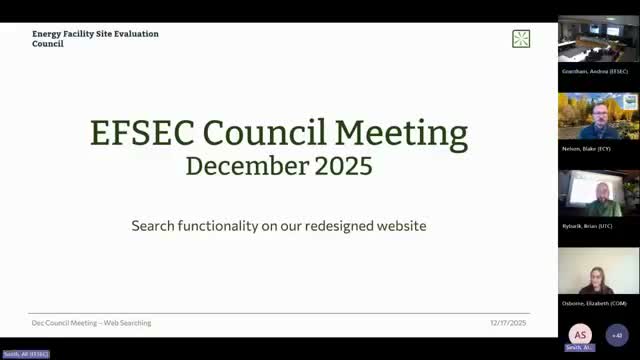
Ally (Ali) Smith, management analyst for FSEC, walked the council through the redesigned public website’s search functionality and explained how tags and 'connections' make events, facility pages and documents interlinked and easier to find. Smith said advanced search filters for facilities, meeting types, date ranges and document types will allow users to narrow results and that the site moves from a static ‘pamphlet’ model to an interconnected ecosystem.
Separately, Sean Green (FSEC SEPA specialist) said staff are finalizing two tools that support the final transmission programmatic EIS issued Oct. 7, 2025: an interactive e‑programmatic website with checklists and bookmarks, and an online resource‑sensitivity GIS map showing environmental resources statewide. Green said technical hosting hurdles have delayed internal hosting, so FSEC is working with the consultant to host the tools in the interim; the tools are expected to be available in January 2026 and demonstrated at the Feb. council meeting.
Why it matters: Improved public access to hearing records, event pages and documents supports transparency in FSEC’s permitting processes and may help local planning departments, tribes and developers find relevant materials earlier in the review cycle.
Next steps: FSEC will continue stabilization and enhancement work in January 2026, will solicit public feedback through a dedicated website email address, and will demo the e‑programmatic and GIS tools at the February meeting.