Get Full Government Meeting Transcripts, Videos, & Alerts Forever!
Get email alerts on the Signs Enforcement topic
No spam. Unsubscribe anytime.
Big Bear Lake Planning Commission backs faster enforcement for temporary and political signs
Summary
The commission voted 5–0 to send a revised development-code amendment to city council that moves many sign-enforcement hearings from the Planning Commission to the city manager or designee, shortens timelines and allows quicker removal of blatant violations while preserving due-process safeguards.
The Big Bear Lake Planning Commission recommended that the City Council adopt a development-code amendment to streamline enforcement of temporary noncommercial signs, including political signs, and to relocate the applicable rules into a new chapter of the municipal code.
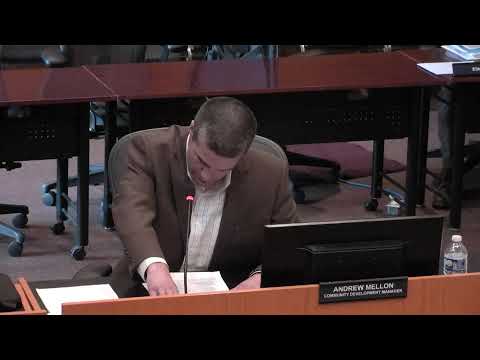
Planning associate Garrett Brodsky told the commission the amendment (Development Code Amendment 2025-005) would relocate subparagraph r of section 17.12.050 into a newly created chapter 12.92 and shorten the enforcement timeline. "Currently the process from beginning to end can take anywhere from 4 to 8 weeks," Garrett said. "The streamlined process will take approximately 2 to 3 weeks." The change would generally shift final administrative determinations from the Planning Commission to the city manager or the manager's designee or third-party hearing officer in some cases.
The amendment is staff-recommended and, according to the staff report, found consistent with the general plan. Staff also said the proposal is exempt from the California Environmental Quality Act under the "common-sense" exemption (CEQA §15061(b)(3)). Assistant City Attorney Albert Maldonado explained that any enforcement action must still afford due process: cited parties must receive notice, an opportunity to present evidence, and an unbiased decision-maker.
Commissioners asked detailed questions about scope and safeguards. Commissioners sought clarity on whether the amendment would target signs placed without property-owner permission (staff: yes, those are commonly cited), how long political signs can be posted (staff: some special-event rules set 30 days for nonpolitical signs but the code already exempts political signs from that limit; staff stated practical limits and enforcement tools remain), and who would determine spacing, size and other objective measurements. Several commissioners urged stronger ability for code enforcement to remove obvious violations in the public right-of-way immediately, with notice afterward and the ability to recover removal costs.
Public commenter Daniel de Branson used his three minutes to allege procedural problems with past code updates and to raise broader accusations about city management and procurement; commissioners and staff did not accept those allegations as evidence in the code discussion and proceeded with the item.
Several commissioners proposed changes to the draft language to (a) allow removal of blatantly illegal signage in public rights-of-way, (b) require staff to send written notice to sign owners after removal that explains how and when a hearing may be requested, and (c) permit the city manager or a designated hearing officer (including third parties if selected) to adjudicate appeals. Staff said the departments involved had vetted the draft and that the city attorney would refine timing language—such as how many days after removal the city will notify a sign owner and when a hearing would be scheduled—before the item goes to council.
Commissioner Lisa (first name used in the record) moved to adopt the resolution as amended and a second was recorded; the planning commission approved the motion by roll call vote, 5–0. The resolution was assigned PC 2025-13 and will be forwarded to City Council with the commission's recommendation and suggested wording edits.
Next steps: staff will work with the city attorney and code enforcement to finalize timing and notice language and will forward the resolution and revised ordinance language to the City Council for a noticed public hearing.