
Canton City Council adopts updated impact‑fee methodology after public hearing
Get AI-powered insights, summaries, and transcripts
Subscribe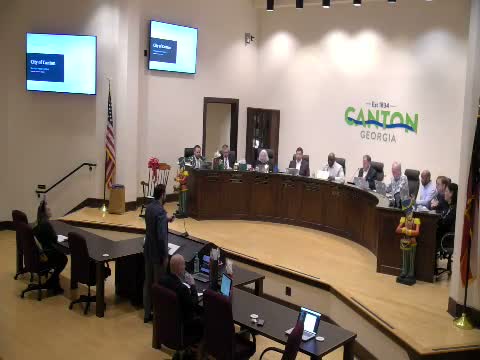
Summary
After a second public hearing, Canton City Council approved a revised impact‑fee methodology and fee schedule intended to align charges with projected capital needs for parks and transportation; the measure passed 5–1.
Canton City Council on Dec. 18 approved an updated impact‑fee methodology and fee schedule intended to ensure new development helps pay for projected capital projects such as roads and parks.
Consultant Mr. Turner, presenting the required second hearing on the update, told the council the methodology allocates capital project costs to new growth and adjusts the city—ducation of commercial and residential classifications. "Our growth rate that they calculated is 2.1% over the next 20 years, and then the commercial growth to be about 1%," Turner said, summarizing the forecast and the study's method for converting capital needs into per‑unit or per‑square‑foot fees. He told council that certain operating costs — including police officers and most vehicles — are not eligible for funding through impact fees under state law.
The proposal narrows commercial classifications (from 55 categories in the current schedule to seven) and changes the residential approach from three broad types to five tiers based on square footage, a shift Turner said reflects recent practice and available building‑type data. Turner also noted parks fees are charged to residential development only and cited the city—xisting parks standard (approximately seven acres per 1,000 population).
Resident Taylor Steele spoke during the public hearing in favor of updating fees but urged a flat per‑unit fee rather than tiering by home size, arguing that household sizes have shrunk even as square footage has grown and that tiering could disadvantage some households. "I would much rather see the city adopt a flat fee rate," Steele said.
Council members discussed multifamily and townhome categories, ADU exemptions in the city code (Mr. Turner said the current code specifically exempts ADUs), and whether software could automate square‑footage calculations; several members said they supported increasing fees to reduce the burden on existing taxpayers and to better fund an estimated pipeline of transportation projects. Mayor called the final motion to adopt; Mr. Warner moved, the motion was seconded, and the council recorded five ayes and one nay. The council also authorized the procedural transmission of the capital‑improvements element amendment to the state for review as required under state rules.
The update will be transmitted to the state as the next step; councilors noted the city can revisit impact fees in future years if needed.