District shows mixed gains on state dashboard; English learners, homeless youth and students with disabilities qualify for extra support
Loading...
Summary
District staff told trustees Atascadero qualified for state "differentiated assistance" for three subgroups (English learners, homeless youth, students with disabilities) mainly around suspensions and chronic absenteeism, while early indicators show year‑to‑date improvements in chronic absenteeism and ELA growth for several subgroups.
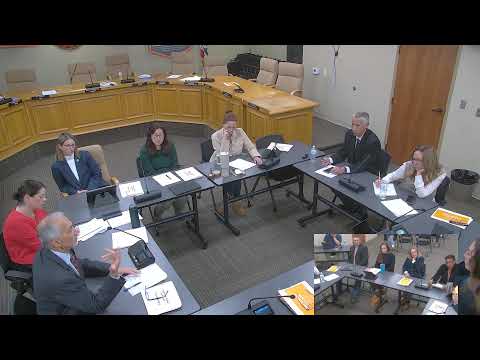
District staff presented new California School Dashboard results to trustees, highlighting both progress and areas requiring targeted support.
Mr. Rossi told the board that the district qualified for differentiated assistance in three subgroups: English learners, homeless youth and students with disabilities, primarily on measures tied to suspension rates and chronic absenteeism. He said county office staff will partner with the district to identify root causes and support site teams to strengthen MTSS (multi‑tiered system of supports) across academics, behavior and attendance.
On positive news, Mr. Rossi reported measurable year‑to‑date improvements: chronic absenteeism fell from 16.2% to 11.8% comparing the first day of school through Dec. 1 this year with the same period last year (a 4.4 percentage point drop, described as a 27% relative decrease), and suspension counts fell from 131 to 99 over the same comparison window. English language arts showed district‑level progress (0.7 points above standard with an 11.1‑point progress increase). Mr. Rossi said the district is already seeing results from PBIS and tiered behavioral supports.
Areas of concern remain. Mr. Rossi said math proficiency remains well below the state standard (he cited the district as 35.6 points below standard for math, though the district has shown progress of 8.5 points). He noted that small subgroup Ns can create volatility in dashboard indicators: several of the flagged subgroups have small student counts, so year‑to‑year swings can reflect a change of only a few students.
On English‑learner progress (ELPAC), Mr. Rossi said middle school made notable gains in redesignation and ELPAC performance, crediting explicit student goal setting and targeted work; however, the district’s overall EL progress indicator was low and slightly down year‑to‑year.
Mr. Rossi closed by summarizing next steps: the district will continue MTSS work in behavior and attendance, prioritize academic Tier 1 improvements, work with the county office on differentiated assistance visits, and bring a full LCAP midyear analysis to the board in February.