Neighbors urge Goochland County to delay Virginia Sports Park shooting-range permit over noise, lead and traffic concerns
Loading...
Summary
Residents near Walton Road told the Goochland County Planning Commission they fear the proposed Virginia Sports Park range would generate hazardous noise, increase traffic and introduce lead into wetlands; speakers urged deferral until a formal noise study, revised traffic analysis and an EPA-certified lead management plan are provided.
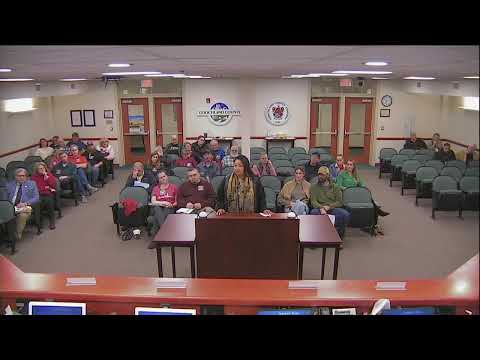
Katrina Dalton and scores of neighbors urged the Goochland County Planning Commission to defer consideration of a conditional use permit for Virginia Sports Park (VSP), saying the proposed 85-acre shooting and archery range on Walton Road would create hazardous noise, add traffic and risk lead contamination of nearby wetlands.
"I ask that you reject this proposed application outright or at least defer consideration until a formal sound study and other data is acquired," Katrina Dalton said, noting her home sits about 510 yards from the nearest proposed shooting station and that she and other neighbors will "have to wear hearing protection while on [their] own property" if the project proceeds as designed. Dalton asked that any sound study be conducted by a licensed engineer, include live-fire demonstrations at every proposed station and measure decibels at neighbors' property lines.
Speakers repeatedly questioned VSP's informal August sound measurements, which Dalton said reported a 53 dBA reading at driveways of adjoining neighbors but lacked details on measurement methods, duration, fire types and exact locations. David Sisson urged the commission to require an ANSI-compliant, type-1 sound-level study with live fire tests and proposed a 72 dB property-line limit similar to one used in another local permit.
Residents also raised traffic and safety concerns. Sisson and others said the traffic impact analysis (TIA) submitted by VSP undercounts impacts by limiting analysis to the two closest intersections rather than event-driven patterns and nearby conflict points; they asked for a revised TIA that models tournament and competition arrival patterns.
Environmental risks were another recurring objection. Lindsey Steele and others noted local acidic soils and on-site wetlands that could increase lead mobility, and asked for a certified lead management plan. Several speakers pointed to the Pamunkey watershed and the site's proximity to designated resource-protection areas and a FEMA floodplain as reasons to require stronger safeguards or to deny the permit.
Experts and former local officials who addressed the commission characterized the applicant's proposed mitigation as limited: VSP proposes 50 feet of vegetation and 8-foot berms in select areas, but speakers said gaps caused by wetlands and site constraints would reduce effectiveness. Stan Patterson, a retired construction manager, estimated the combined measures would reduce noise only modestly and noted that breaks in berm continuity can eliminate their benefit.
VSP is listed on the Planning Department's agenda for a Planning Commission public hearing on Jan. 15, 2026. Commissioners and staff did not act on the CUP during this meeting; public comments closed at the meeting's end and the item remains scheduled for the January public hearing.
The commission heard multiple requests for specific next steps from speakers: require a formal sound study (live-fire, ANSI standards), a revised traffic impact analysis that models event arrivals, an EPA-recognized lead management plan with ongoing monitoring, restrictions on hours and number of events, and clear measurement points at property lines. Several residents offered to provide documents or examples of prior conditional-use conditions from neighboring localities.
What happens next: the Planning Commission will take up the advertised public hearing(s) on Jan. 15, 2026, where the VSP application is slated to appear; commissioners did not vote on the VSP CUP at this meeting.
Sources: public comments and the director's report presented at the meeting. All quoted speakers spoke during the citizen comment period and are identified in the commission record.