Montgomery County adopts bipartisan $1.2 billion 2026 budget, approves 5.462‑mil tax rate
Loading...
Summary
The Montgomery County Board of Commissioners unanimously approved a roughly $1.2 billion 2026 budget and set the general‑fund real estate millage at 5.462 mils (about a 4% increase), approving capital, non‑general and pension funding and increases for community college support.
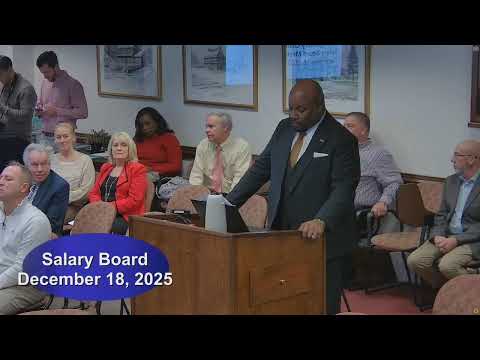
Montgomery County commissioners on Dec. 18 unanimously adopted the county's 2026 budget, setting the general‑fund real estate millage at 5.462 mils — an approximately 4% increase that the county’s chief financial officer said will generate about $12 million in additional revenue.
The vote finalizes a package that County Chief Financial Officer Dean Dortone said appropriates $632,700,991 for the general fund and, when combined with capital and other operating funds, puts the county’s total 2026 budget near $1.2 billion. Dortone told commissioners the general fund total and the proposed millage reflect months of departmental budget reviews, public hearings and cost‑containment measures. “This is approximately a 4% increase, and it will generate $12,000,000 of new revenue for the general fund,” Dortone said during his presentation.
Why it matters: Commissioners framed the package as a bipartisan compromise that preserves investments in high‑priority services while addressing fiscal pressure. The budget includes the first year of a $255,754,388 capital program, non‑general operating budgets totaling $345,515,628 and what Dortone described as roughly 35% of county revenue coming from restricted grant funding for health and human services.
Key details and votes - General fund: $632,700,991 appropriated for fiscal year 2026; millage set at 5.462 mils; board approved the motion by voice vote (all aye). - Non‑general operating budgets: $345,515,628 adopted unanimously. - Capital fund: first‑year capital expenditures of $255,754,388 were adopted unanimously. - Pension contribution: commissioners authorized assigning $5,335,000 of the general fund unrestricted balance to the county’s actuarially determined pension contribution as a contingency for future actuarial increases; the motion passed. - Community college: the board also approved increasing the dedicated community college millage from 0.39 to 0.49 mils; CFO Dortone said that change is expected to raise about $6.2 million for Montgomery County Community College; the motion passed unanimously.
What commissioners said: One commissioner summarized the year’s fiscal work, saying the board started the year confronting what had been characterized as a roughly $55 million starting deficit and worked to reduce it by about $30 million through savings and targeted cuts. Commissioners repeatedly described the outcome as a difficult but bipartisan settlement reached after hearings and staff collaboration.
Related investments and context: Chair and other commissioners highlighted targeted investments in housing (including a county commitment of $5.3 million for housing priorities and transitional shelter projects in Lansdale, Norristown and Pottstown), emergency behavioral health resources and public safety radio equipment for first responders. The board also emphasized cost‑containment work by the Office of Innovation, Strategy and Performance and noted approximately $1.2 billion in total county financial management across operating and capital funds.
Next steps and implementation: The resolutions adopting the budgets and millages were approved on Dec. 18 and the county’s finance and administrative offices will implement line‑item allocations and procurement consistent with county purchasing regulations. The county said quarterly updates and further fiscal briefings are planned for 2026.
Ending: Commissioners closed the vote with unanimous support, and the board described the approval as the first bipartisan unanimous budget in several years.