
Cheyenne council advances CDBG amendment to fund land acquisition for affordable housing
Get AI-powered insights, summaries, and transcripts
Subscribe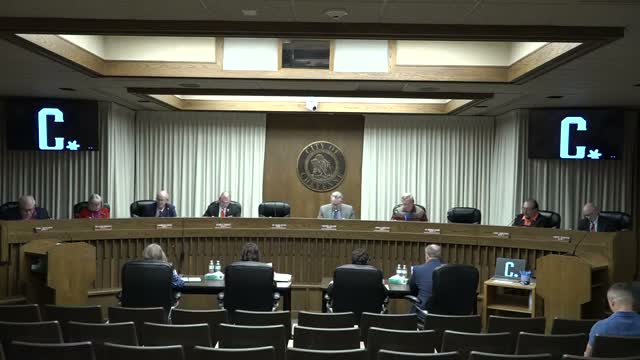
Summary
City staff proposed repurposing returned and repayment CDBG funds to add a new consolidated‑plan goal for safe, decent, affordable housing and to fund land acquisition expected to enable roughly 180 affordable rental units; council opened the required public hearing and will send the amendment to Finance Committee for further review.
Cheyenne city staff on Monday outlined substantial amendments to the city’s 2025–2027 consolidated plan and the 2025 annual action plan for the Community Development Block Grant (CDBG) program, proposing to repurpose returned and repayment funds to prioritize affordable housing and neighborhood improvements.
Amy Gorby, community development manager, presented the staff report and said the amendment reallocates funds across multiple goals: preserve and improve low‑income neighborhoods (new amount approximately $480,946), public facility improvements (about $330,000), public services promoting self‑sufficiency ($140,438) and program administration ($249,660 for the three‑year plan). Gorby said the amended plan adds a new goal to “provide safe, decent, and affordable housing” and proposes funding roughly $642,000 for that purpose, including land acquisition activities. She described available funding as “approximately $260,000 from returned CDBG funds plus another $375,000 in anticipated CDBG repayment income, totaling approximately $635,000” for new land acquisition activities that staff said could lead to about 180 affordable rental units.
Gorby also told the council that two previously listed public‑service activities — HealthWorks and CLIMB Wyoming — were cancelled because subrecipients said they could not meet new federal requirements, including translation services no longer funded by HUD, and therefore those activities were removed from the plan.
Mayor Collins and several councilmembers thanked staff and advisory‑council members for their work. Collins said the amendment will be considered by the Finance Committee on Jan. 6 and then returned to the governing body in January; if the council approves it, staff will submit the amendment to HUD in January and proceed with environmental and regulatory reviews required before funds can be allocated.
The required public hearing drew brief public comments and expressions of support from advisory‑council members; no formal vote on the amendment occurred Monday.
The council’s next steps are committee review, a council vote in January and, if approved, submission to HUD for final authorization and required environmental reviews.