
Munster CFO warns Senate Enrolled Act 1 could reduce district revenue, urges public outreach
Get AI-powered insights, summaries, and transcripts
Subscribe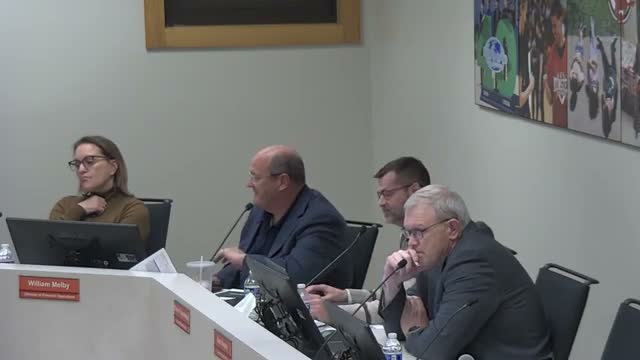
Summary
Chief Financial Officer Bill Melby told the School Town of Munster board that modeling shows a multi-year decline in net assessed value under Senate Enrolled Act 1, which would cut levy revenue unless the tax rate is raised; trustees discussed community education and contingency planning.
Chief Financial Officer Bill Melby told the School Town of Munster Board of School Trustees on Dec. 8 that state changes in property tax law known as Senate Enrolled Act 1 are projected to reduce the district’s net assessed value and, unless offset by higher tax rates, will lower levy revenue in coming years.
Melby presented Policy Analytics projections showing a decline in net assessed value beginning in 2027 and continuing through 2031, with cumulative decreases that would require higher tax rates to preserve the same levy. "When your net assessed value decreases, that means revenue decreases," Melby said during his presentation, adding that the district would face a choice of receiving less money or increasing the tax rate.
The presentation reviewed historical local tax-rate data, noting Munster’s actual tax rate for 2025 as 1.2688, and included modeling that showed how the same levy would require a substantially higher tax rate under the policy-analytics scenario. Melby said the district is taking a conservative view of near-term finances but warned that longer-term impacts could require operational adjustments and additional community outreach.
Board members and administrators framed the presentation as a community education priority. Trustee Castro and others emphasized the need for clear public communication about how district funds are allocated; communications director Ms. Pyrick described a draft community website and newsletter content that will explain fund structure and referendum history.
Melby and trustees said no immediate referendum decision was being made. "We want to make sure the public understands how our finances work and why certain decisions were made," Pyrick said. Board members asked staff to continue refining educational materials and to coordinate outreach as projections become clearer.
Next steps listed at the meeting included continued monitoring of state policy, updating the district’s public materials, and preparing scenarios for the board and community if revenue trends materialize. The board did not take any formal vote that night on tax policy or referenda.