
Finance committee hears warning about county insurance trust; explores self-funding and GIC as fallback
Get AI-powered insights, summaries, and transcripts
Subscribe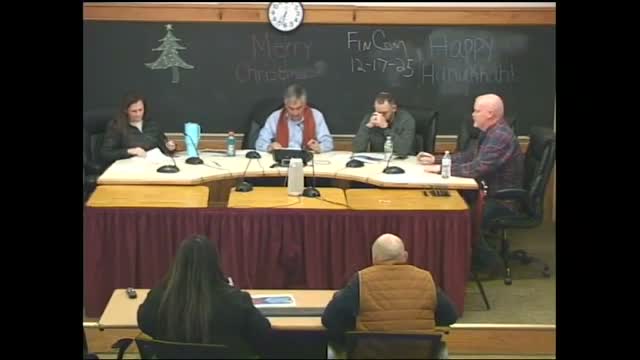
Summary
The Charlton finance committee heard that Hampshire County’s health-insurance trust is facing depleted reserves and staffing losses, prompting the town to weigh short-term self-funding, reinsurance and the state GIC as contingency options.
Speaker 1 opened a review of the town’s health-insurance program and Speaker 5 said Hampshire County’s joint trust has hired a consultant and currently “doesn’t look great” financially. Committee members heard that the trust has drawn down reserve accounts and lost staff responsible for processing claims, which has delayed claims data needed by carriers to rate plans.
Speaker 5 described the situation in direct terms: “Their financials don't look great,” and said the trust had depleted many reserve accounts and was operating primarily on member assessments. The consultant’s updated forecasts have changed several times; Speaker 5 summarized prior projections and current, more conservative estimates presented by the consultant.
Committee members discussed contingency options if the trust were to dissolve or materially reduce services. Speaker 3 outlined a worst-case plan short of immediate vendor replacement: short-term self-funding to cover claims while securing access to another group purchasing arrangement or entering reinsurance/stop-loss coverage for very large claims. Speaker 3 said the town’s health-insurance account would likely be sufficient through the end of the current fiscal year but that planning should continue for midyear contingencies.
Speaker 5 noted timing and procedural constraints for switching plans: several communities were reported to be considering leaving the trust, and GIC (the state Group Insurance Commission) requires notice deadlines. She said some towns planned to move to the GIC because it guarantees continuity of coverage for municipalities but acknowledged that committee members view GIC as a last-resort option because plan features can differ.
Speaker 5 also reported that the Department of Revenue (DOR) had been contacted about deficit-spending verbiage that could allow temporary borrowing to meet claims obligations if necessary. Quoting meeting discussion: “the DOR is working on, I guess, verbiage in the law to allow us to deficit spend,” Speaker 5 said, adding that any such move would need to be reconciled at a subsequent town meeting.
The committee agreed to monitor the trust monthly, pursue rate quotes and alternative purchasing groups through February–March, and continue discussions with insurance advisers about reinsurance options and the feasibility of short-term self-funding. The meeting record does not show any formal vote on a policy change; members instructed staff to report updates at the next meeting.