
Design preview for new elementary school highlights pods, storm shelter and flexible space
Get AI-powered insights, summaries, and transcripts
Subscribe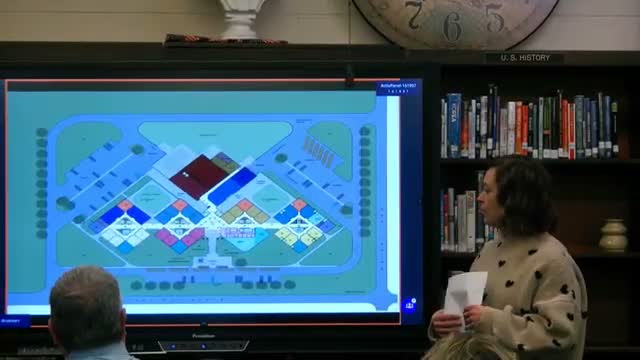
Summary
Designers showed a proposed 82,350-square-foot elementary school on about 10 acres with four classroom pods, a combined media/STEM lab, flexible rooms and a 4,260-square-foot storm shelter rated to hold about 811 people by the presenter; playgrounds, bus circulation and food-delivery access were also detailed.
Design consultants presented an early concept for a proposed new elementary school sited on about 10 acres and described interior organization, safety features and circulation.
The presenter said the building footprint is about 82,350 square feet and noted two main entrances (facing College Boulevard and Harper Road) with a welcoming entry plaza. The district’s historic Longfellow Bell is planned to be relocated into a custom tower at the front plaza.
Inside, the layout centers on four classroom pods and one activity pod. The presenter gave classroom-size averages of roughly 870 square feet for typical classrooms and indicated kindergarten and pre-K rooms are larger (roughly 950–975 square feet by the presenter’s estimate). The design includes two special-needs classrooms per pod, four flex rooms that can convert to classrooms, and three art rooms distributed across pods.
A combined media center and STEM lab sits near the core; the presenter described it as roomy enough to accommodate additional arts and extracurricular activities. The activity pod contains a cafeteria and kitchen sized to ‘‘comfortably hold 250 people’’ and a gym with a regulation full-size high-school basketball court and roughly 130 telescoping bleacher seats; the music room connects directly to the platform for performances and provides ADA access to the stage.
Designers emphasized safety and operational logistics: playgrounds are fully enclosed and arranged by age group with synthetic-turf options and drainage underlay considered; rolling gates near the kitchen provide food-delivery access and allow fire-truck passage; buses are staged away from main student drop-off points.
The presenter noted a storm-shelter area of approximately 4,260 square feet and said code calculations estimate it can hold about 811 people — an occupancy figure presented as a design/coding estimate rather than a counted capacity for a single event.
Board members asked several operational questions about sight lines, landscaping adjacent to glass curtain walls and the possibility of concrete aprons or paved surfaces in high-traffic areas. The design team said many of those details remain in the design phase and will be confirmed during further cost-estimating and value-engineering steps.