
Elections office shows reserves, explains staffing and warns of potential costs for ranked‑choice voting
Get AI-powered insights, summaries, and transcripts
Subscribe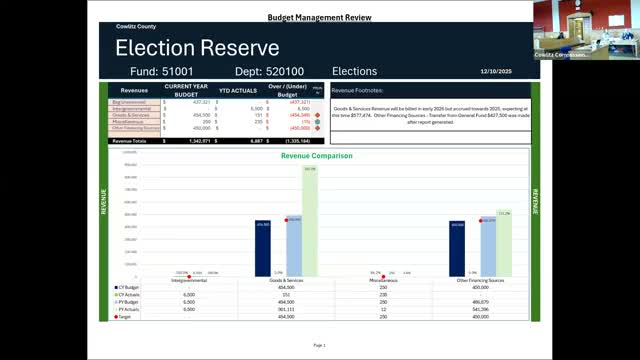
Summary
County finance and elections staff said election reserves and billing timing explain year-end positions; they flagged high potential vendor costs if ranked‑choice voting is implemented and described a shift from temp staffing to full‑time hires.
County finance staff and elections officials reviewed the elections budget monitoring report and explained why current accrual and billing timing affects the year-end picture.
Kathy Funk Baxter, the county's finance director, introduced the elections BMR and described two funds the office manages, including an election reserve used for operating expenses. "This is where the operating expenses are contained," she said while summarizing the account structure and the planned billings to special districts and cities.
A department representative explained that elections captures the entire year's payroll in a thirteenth month and then allocates costs between jurisdictional election activity and maintenance. That timing means some billings are recorded as accruals and staff expected roughly $577,000 of revenue that will post later and push that fund over budget when recorded.
Staff described personnel changes: the office gained a full-time position in October 2024 after a period of understaffing. During the understaffed period the county relied heavily on temporary staffing — a temporary-services line that previously totaled about $182,163 dropped to roughly $26,000 this year as permanent hires replaced temps, while direct-labor costs increased accordingly.
On equipment and capital, staff said a restricted capital reserve receives 15% of charges and is intended to finance larger purchases such as tabulation systems. Officials noted the county's current tabulation vendor lacks ranked-choice-ballot capability and said adding it elsewhere has carried high price tags — one county's charter change required a vendor update that cost roughly $1 million — and warned that implementing ranked-choice voting would require substantial time, funding and public education.
Staff gave a concrete example of replacement hardware costs: about $72,000 reported for two scanners. Commissioners asked clarification questions about billing coverage, accounting entries and whether reserves are sufficient to cover replacement and special projects.
No formal action was taken; staff recommended continued monitoring and posting of accruals and transfers.