Get Full Government Meeting Transcripts, Videos, & Alerts Forever!
Get email alerts on the Education Technology topic
No spam. Unsubscribe anytime.
Easton schools outline approach to student use of AI and apps, emphasize privacy and teacher oversight
Summary
Instructional technology director Olivia Ramos told the school committee AI and many educational apps are already in student use; she urged policies for vetting, privacy protections, digital literacy starting in grade 3, professional learning for staff and families, and pilots of privacy‑focused tools such as a Securly chat‑style tutor.
Olivia Ramos, Easton Public Schools' director of instructional technology, gave a high‑level overview of opportunities and risks presented by artificial intelligence and student‑facing educational apps.
Ramos said students are already using chatbots, translation tools and AI‑based writing and study apps and that the district’s role is to bring that usage into an intentional instructional context. She highlighted benefits — personalization, accessibility for multilingual learners and students with disabilities, and automation of routine tasks — while warning about inaccuracy, bias, data privacy and academic integrity risks.
Ramos advised several district steps: create clear expectations and guidance for appropriate use; embed privacy into digital citizenship curriculum (digital literacy now taught from grade 3 in the district); vet tools before classroom use; provide professional learning for staff and informational sessions for families; and retain human oversight so tools supplement rather than replace teaching.
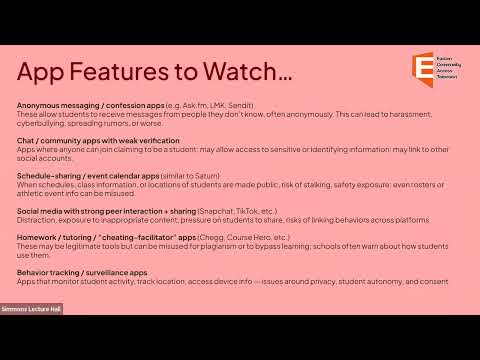
On specifics, she confirmed the district blocks ChatGPT on school Wi‑Fi and Chromebooks but acknowledged students can bypass blocks by hot‑spotting to personal phones. Ramos said the district uses Securly for monitoring and is exploring a privacy‑designed chat tool from that vendor as a possible pilot; she also flagged scheduling apps that allow unverifiable student identities and anonymous messaging features as safety concerns.
Committee members asked about blocking policies, guest network protections and family outreach. Ramos said the district will push resources via the technology website and run family workshops through Eastern Community University; committee members suggested additional communication and a family session offer.
No formal policy vote occurred; the presentation set the stage for the technology committee’s AI work this year and for future guidance to be drafted with input from staff, parents and school committee members.