Get Full Government Meeting Transcripts, Videos, & Alerts Forever!
Get email alerts on the Special Education topic
No spam. Unsubscribe anytime.
Adelanto district special-education leaders report lower IEP rate, new programs and preschool expansion plans
Summary
District special-education staff reported a drop in IEP identification since 2016, added 10 in-district programs that allowed bringing back 127 students from county placements, and outlined a preschool-expansion proposal intended to recapture several hundred thousand dollars for the district.
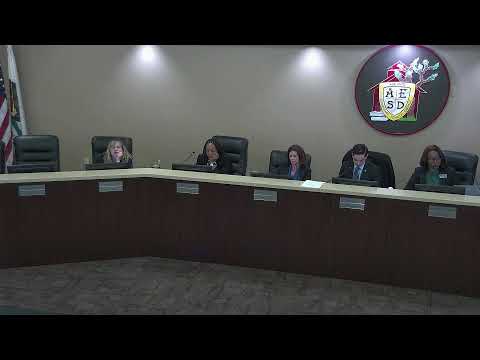
Special-education leaders for the Adelanto Elementary School District told the board on Sept. 23 that the district has reduced its percentage of students on individualized education programs (IEPs) since a 2016 review.
At the presentation, the Special Education presenter said the district’s IEP rate fell from 17.9% in 2016 to 15.2% currently, compared with a statewide figure cited in the presentation of about 13%. The presenter described district efforts — placing school psychologists on campuses, strengthening student-study teams and focusing on in-class interventions — as the primary drivers of the change.
The presenter also reported that districtwide one-on-one paraprofessionals fell from 125 in 2016 to 30 now, and that the district has added 10 new special-education programs this year. Those programs, the presentation said, enabled the district to "pull back" 127 students who otherwise would have attended county programs; the presenter said keeping those students in-district should increase the district’s average daily attendance funding and "put back $3,700,000" into district accounts.
District staff said the district currently outsources some speech-language services because of a regional shortage; the presentation cited outsourcing costs as 6.9% of the relevant budget. Staff also described a slate of family-engagement events, IEP workshops and internal crisis-prevention training now offered in-district rather than through the SELPA.
Finally, Special Education staff outlined consideration of a preschool expansion. They said the district currently pays for 85 preschool students on IEPs and estimated that bringing those students into a district-run preschool could save roughly $425,000 annually; opening preschool seats to all students, staff said, could potentially recapture "anywhere from $1.9 to $2,500,000" (as presented). The presenters characterized the preschool plan as a proposal under study, not a final decision.
The board did not take formal action on the items presented; trustees thanked the Special Education staff and asked to receive updates as plans progress.