
Green Bay board declines weapons-detection pilot after debate over costs, operations and possible false sense of security
Get AI-powered insights, summaries, and transcripts
Subscribe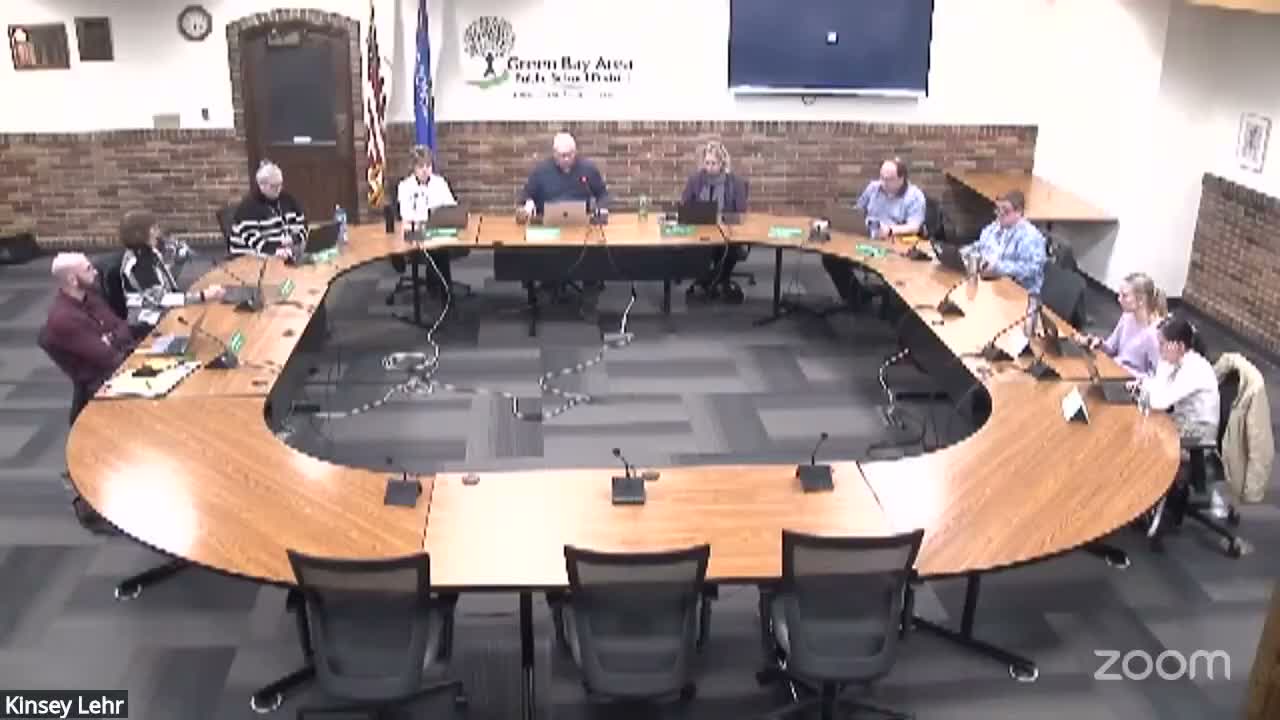
Summary
The Green Bay Area Public School District board debated and rejected a motion directing administration to pilot portable weapons-detection systems at comprehensive high schools, citing uncertain costs, operational challenges, questions about grant eligibility and concerns a pilot could create a false sense of security.
The Green Bay Area Public School District Board of Education on Tuesday voted down a proposal to direct administrators to implement a pilot of portable weapons-detection systems at the district's comprehensive high schools.
The motion, read by board member Lynn, would have authorized district administration to explore and implement a pilot program and return to the board with a report at the conclusion of the pilot. Jeanette seconded the motion. After extended public discussion, the motion failed on a roll call vote: Meister — no; Canal — yes; Minow — no; Gerlach — no; Lyerly — yes; McCoy — no; Becker — no.
District staff summarized vendor responses during the discussion. One vendor offered a two-week no-cost pilot; others proposed rental or purchase options. Staff said an 80% reimbursement arrangement (if the district purchased the equipment after rental) projects about $9,000 for a four-month pilot at one site; rental scenarios were described as roughly $11,000 for an initial site with $8,400 for each additional site; a $2,500-per-month option would total about $10,000 for four months; and one two-week single-site pilot was quoted at about $20,000. Staff cautioned these are vendor-provided estimates and said some vendors would only agree to shorter trial windows.
Staff described two broad system types under consideration: an open-air red light/green light 'open gate' system that signals a potential object without providing camera-based localization, and camera-enabled systems that identify a specific location on a person (a so-called 'red box') for secondary screening. All systems described require people to pass in single file through detection lanes, and most require additional building and staffing adaptations.
Board members pressed staff on logistics. Staff said backpacks can pass through but, depending on sensitivity settings, contents may need to be removed for inspection; large metal items, Chromebooks and water bottles could trigger alerts and require separate handling. Exterior entry points would need additional security measures or alarms to limit unmonitored access. The memo embedded a draft policy on searches (staff said Melissa provided the draft) and staff said the district is exploring whether Office of School Safety grants would cover equipment costs; eligibility for associated costs remained uncertain.
Opponents of the pilot raised substantive objections. Board member Andrew argued many types of school shootings would not be stopped by detectors, that detectors can be bypassed or disabled, and that a short pilot could create a false sense of security if the board or community expects ongoing deployment but the district cannot afford long-term purchase and staffing. "I just do not think we get the protection that people think we do," Andrew said, urging caution about the operational and reputational consequences of a pilot. Other members said surveys of students and staff had produced mixed results and recommended community engagement before any trial.
Supporters of testing said a pilot would provide local data on operations, false-positive rates and staffing needs, while some board members countered the district already had ample external experience and that a local pilot might not add materially to what is known.
The chair called the question after debate. With the motion failing, the board did not authorize the pilot and moved on to other agenda items.
What happens next: District staff told the board they will continue to explore vendor conversations and potential grant opportunities, but there is no board authorization to implement a pilot at this time.