
Young County residents press commissioners for stronger protections in Tapadero solar and potential data‑center deals
Get AI-powered insights, summaries, and transcripts
Subscribe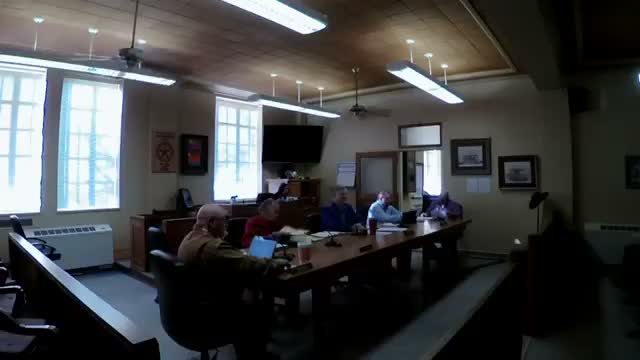
Summary
Residents urged Young County commissioners to add enforceable protections for noise, lighting, dust control, traffic and emergency services in a proposed Tapadero pilot/tax‑abatement agreement and in talks over a potential data center, while county staff described minimum payment floors and timelines in the draft agreement.
Young County commissioners spent large portions of their Dec. 20 session hearing public concerns about a proposed Tapadero solar pilot agreement and separate data‑center proposals, as residents demanded clearer, enforceable protections for noise, lighting, construction impacts and long‑term public costs.
In extended public comment, Hailey Steele, who said her property borders a proposed data‑center site, told the court: “It’s my backyard. I will drive past it every single day,” and urged commissioners to “ask real questions and demand real transparency” about environmental studies, water use and infrastructure (Hailey Steele, public comment). Jolene McFadden, a ranch owner, argued the county risks permanent damage to wildlife, views and rural quality of life if large projects proceed without stronger local conditions: “You are allowing these people with money and big ideas to steal our investment,” she said (Jolene McFadden, public comment).
County staff and elected officials described how the draft pilot agreement is structured and why some numbers are presented as estimates. Court staff said the agreement includes a minimum‑capacity floor for the solar component (270 megawatts) and a minimum for the solar-plus‑battery component (360 megawatts). Using those floors, staff calculated a combined minimum pilot payment of about $1,028,610 per year and cited a minimum battery component amount of roughly $370,080, figures the court read from the draft during the meeting. Staff also said developers would pay a one‑time $300,000 contribution tied to the start of construction that the court would allocate between the sheriff’s office and volunteer fire departments (figures read by staff at the meeting).
Commissioners cautioned that final taxable value and the ultimate tax yield will not be certain until construction and appraisal are complete. Court staff said they compared appraisal valuations in other counties (Bosque and Lamar) to estimate what the local appraisal district might assign per installed megawatt and that pilot payments were modeled to yield a higher per‑megawatt figure than some recent appraisal district valuations.
Residents raised several recurring concerns: whether the draft agreement includes specific noise and dark‑sky restrictions; how 24‑hour construction would be limited and enforced; dust and road‑wear from heavy truck traffic; long‑term fire and emergency‑response costs, including lithium‑battery fire risk; and whether one‑time mitigation payments will cover ongoing needs. A speaker asked whether developers had sought nondisclosure agreements with county officials or staff; commissioners said they had not signed such NDAs and that any confidentiality questions would be handled in due course.
Court staff presented a working list of provisions they said the county might seek to include in negotiations: a 45‑decibel noise limit, lighting restrictions, 300‑foot setbacks from property lines, a requirement that 50% of a site be maintained as green space, construction traffic and parking plans (including shuttle/bus options), sales‑tax reporting to Graham and Young County, mandatory contributions and training for volunteer fire departments, and preferential local hiring commitments.
Andy Jones, a representative of Headwaters who identified himself at the hearing, told the court he is a Young County resident and said he will make staff available locally to answer questions; Jones also said he would walk away from the project if community expectations are not met (Andy Jones, public comment).
What happens next: court members signaled they will continue to refine the county’s negotiating priorities and that they will likely seek legal and consulting help before finalizing any tax‑abatement or pilot agreement. The draft agreement the court discussed contains deadlines tied to commercial operation (the court read a provision that would void the agreement if the project has not achieved commercial operation by Jan. 1, 2029), but no final abatement request from a developer had been presented to the court at the Dec. 20 meeting.
The commission did not take a final vote on the Tapadero pilot agreement on Dec. 20; the topic is expected to return to the court for further consideration once the city and county have better coordination and when any formal abatement request is on the agenda.