
BAC raises facility and safety concerns: sidewalks, pickup/drop‑off and portable classrooms
Get AI-powered insights, summaries, and transcripts
Subscribe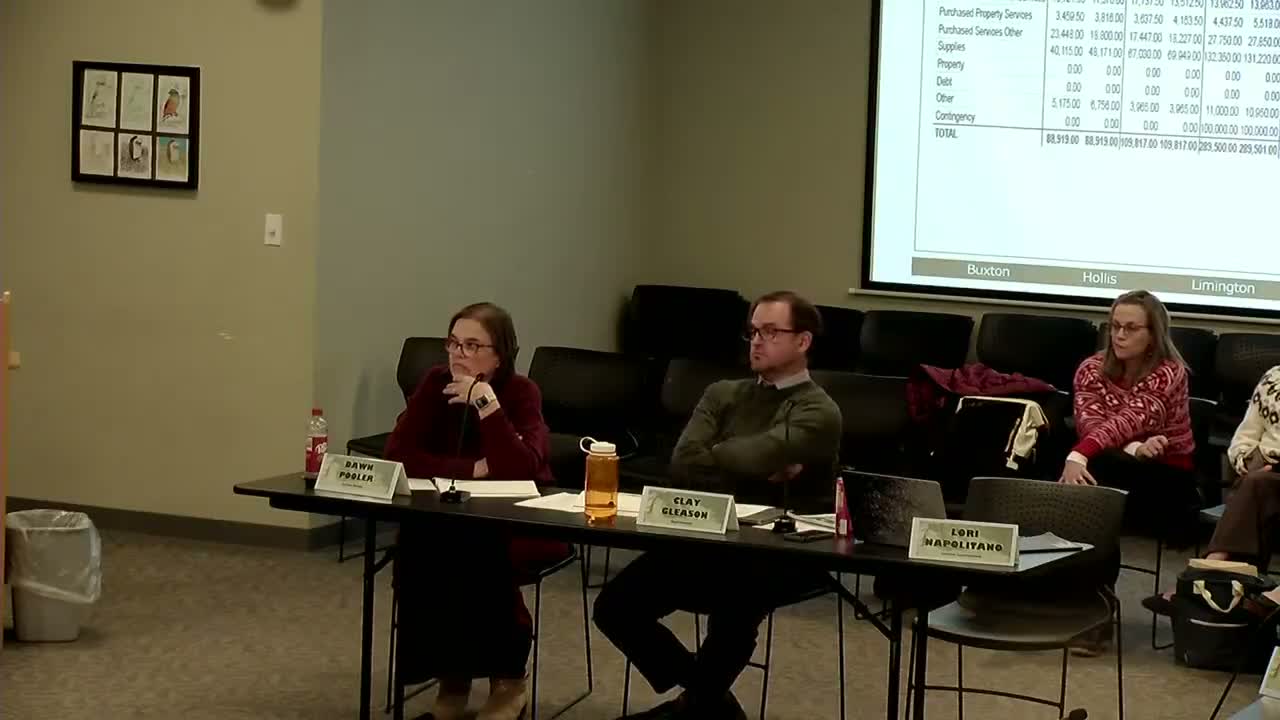
Summary
Members and principals told the BAC RSU 06/MSAD 06 faces ongoing site‑design problems at some elementary schools (notably Edna Libby and Buxton), worsening parent pickup/drop‑off flows since COVID, deteriorated sidewalks at Hollis, and the continuing use of portables; administrators said these issues will factor into future construction and consolidation planning.
Committee members used the budget presentations to press administrators on facility and transportation issues that affect daily operations and student safety. Several principals and administrators said certain school sites were not designed for heavy parent car traffic, creating hazardous pickup and drop‑off conditions that have worsened since COVID when families transported more children by car.
At Hollis School, Principal Angela Scully highlighted badly cracked sidewalks that she described as a safety hazard that may not meet ADA standards; the donation of $15,000 will help playground upgrades but not broader sidewalk repairs. Administrators said site design will be a central consideration during any future construction project and should emphasize safer circulation for buses and cars.
The committee discussed the continued use of portables at some schools (for example, Georgie Jack), aging modular classrooms and how pre‑K expansions and higher special‑education placements change space calculations. Administrators noted that consolidation or reconfiguration (putting multiple small schools together) could improve efficiency but would be a long‑term solution requiring planning and potential construction funding.
Committee members asked whether the district uses a centralized purchasing agent to lower supply costs; administrators said some cooperative buying exists (Staples programs, Sebago Alliance connections) but there is no single district purchasing agent for all elementary purchasing. The meeting closed with reminders about next steps and the BAC adjourned.
What’s next: administrators said facilities and construction planning will be part of future discussions and that the BAC should expect more detailed proposals and cost estimates when the district advances any design work.