Get Full Government Meeting Transcripts, Videos, & Alerts Forever!
Get email alerts on the Wildfire Legislation topic
No spam. Unsubscribe anytime.
Larimer County committee details four wildfire-related bills that passed this session
Summary
Members of the Larimer County Legislative Committee summarized four wildfire or forestry-related bills that passed the 2024 legislative session, including a $250,000 prescribed-fire claims fund, changes to wildfire code adoption timelines, a bolstered DFPC wildfire information website, and a vegetative fuel mitigation bill allowing limited fines.
Larimer County commissioners and staff on May 23 reviewed four wildfire-focused bills that advanced this year and described how the measures could affect local planning and operations.
Allison Lurch, providing the committee's legislative update, said Senate Bill 25-007 — an initiative to support prescribed burning — passed with reduced funding. "The ask was $1,000,000," Lurch said, "but the final appropriation established $250,000 into the prescribed fire claims fund," a change she called "a huge accomplishment" given tight budgets.
Lurch said the bill also broadens paths to becoming a certified burner beyond completing Division of Fire Prevention and Control (DFPC) training and includes coordination with DFPC and the Colorado State Forest Service to expand workforce capacity for on-the-ground prescribed fire work.
Lurch also told the committee Senate Bill 25-015 will require DFPC to bolster its wildfire information website with county- and regional-level links to improve coordination between DFPC and counties. "That bill asks DFPC to bolster their wildfire information website with links to county information," she said.
Committee members discussed Senate Bill 25-142, which changes procedures for the wildfire resiliency code board. Lurch explained the bill extends the time local jurisdictions in the wildland-urban interface have to adopt statewide wildfire codes from three months to nine months and permits local governments to enter cooperative agreements — including third-party contractors or other governing bodies — to enforce the codes.
Finally, Lurch summarized House Bill 25-1009, the vegetative fuel mitigation bill. She said the law allows fire protection districts or metropolitan districts to create programs to mitigate hazardous fuels on private property (agricultural land was described as excluded). After warnings and outreach, those districts may assess fines; later in the meeting Lurch specified the cap at "$300 per property, per incident." Collected funds may be used to mitigate fuels on properties where owners cannot do the work themselves, such as low-income or elderly homeowners.
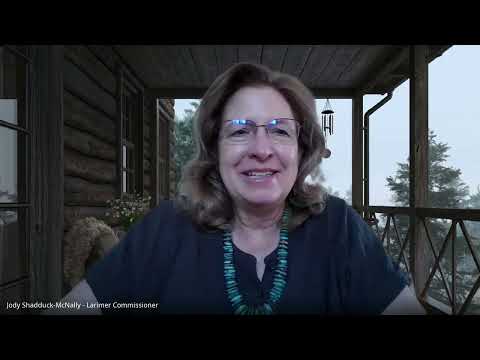
Chair Joey Shai McNally and other members underscored how limited state appropriations make even small appropriations consequential and discussed tracking outcomes and implementation details at the county level. "That $250,000 was quite the ray of hope," McNally said, noting continued budget pressures ahead.
The committee asked staff to continue coordinating with state agencies, including DFPC and the Department of Natural Resources, and to circulate further implementation details to members as they become available.
The committee did not take formal action on these bills at the meeting; the session was an informational update and planning discussion about how the county will follow implementation steps and outreach.