
Council hears bleak budget outlook but State Forest Service keeps a $10 million line
Get AI-powered insights, summaries, and transcripts
Subscribe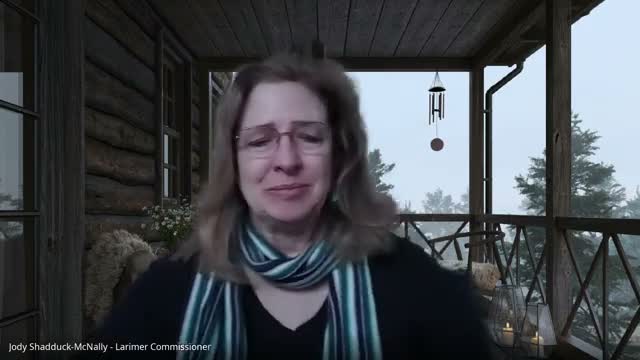
Summary
Committee heard that the legislature’s focus on the budget creates tight funding for forest-related bills; the State Forest Service retains roughly $10,000,000 in line items while several forestry bills remain contingent on appropriations.
The Colorado Forest Health Council’s legislative committee on April 4 heard that a state budget squeeze is likely to limit new spending on forest-health programs even as the State Forest Service maintains roughly $10,000,000 in designated line items.
James, who gave the committee’s state legislative update, said lawmakers spent the week on the budget and that the joint budget committee is balancing a multibillion-dollar shortfall. “They have been focused entirely and completely on the budget,” he said, warning that tight appropriations will make it difficult for bills with fiscal notes to advance. He told the committee the State Forest Service has “about $10,000,000 in line items” and that an early push to cut $2,000,000 from those funds was resisted.
The committee is watching several bills that could require funding if they move, including what James identified as House Bill 1078 (Forestry and Firefighter Workforce and Education Program), Senate Bill 7 (increasing prescribed burning), and a bill on detection and cameras he called Senate Bill 1110. James said those bills will compete for a constrained pot of funds and that “it’s going to be a very tight year for anything to pass that’s gonna have a fiscal note.”
Chair Larimer County Commissioner Joey Shadd McNally framed the funding conversation around homeowner protections and insurance, noting she had testified on a bill she described as a wildfire risk-modeling transparency tool that would require insurers to use certain models and share information with the insurance commissioner and the public. “The bill requires insurance [to] use a wildfire risk model … and [to] provide notices to policy holders to provide transparency,” she said, adding the measure aims to help homeowners who invest in home hardening and defensible space qualify for insurance relief.
Why it matters: The committee’s work on workforce, prescribed burning and detection technologies depends on appropriations. With limited discretionary state dollars, members said they must prioritize the proposals most likely to reduce long-term costs and loss.
What’s next: Committee members asked staff to monitor fiscal developments as budget negotiations continue and to report back before decisions are finalized at the council level.