Get Full Government Meeting Transcripts, Videos, & Alerts Forever!
Get email alerts on the Resiliency topic
No spam. Unsubscribe anytime.
Commission weighs neighborhood-led resiliency group, sewer‑lateral rebates and short‑term rental tracking
Summary
Commissioners debated creating resident resiliency forums or advisory efforts, asked staff to map overlapping resiliency projects, and discussed possible lateral‑line replacement incentives and business-licensing for short‑term rentals.
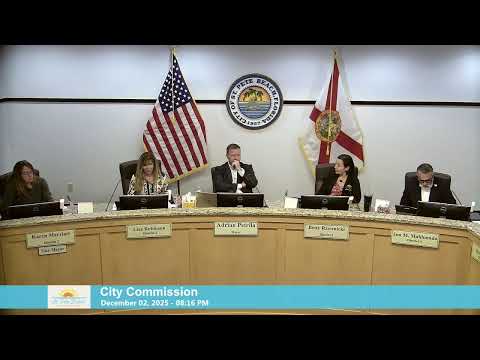
Commissioners used the discussion portion of the meeting to return to lagging resiliency items after the recent storms. One commissioner proposed a time‑limited resident resiliency group to surface neighborhood‑level issues — flooding, seawall repairs, land‑development problems and local revenue ideas — and suggested the library could host initial, grassroots forums. Other commissioners cautioned that staff capacity is limited and suggested staff map current projects (fee studies, CRA study, watershed master plan) and design outreach that plugs into those efforts.
Commissioner Robinson requested inviting FEMA staff (Mike Twitty was named) to explain implications of the 2025 FEMA letter for properties that have not completed recovery work, and asked staff to clarify substantial improvement/substantial damage language in the code to reflect recent administrative practice (for example, whether certain contractor costs like insurance, overhead or profit are included). Robinson also raised concerns about short‑term rentals and asked whether a business tax receipt or licensing requirement for single‑family short‑term rentals should be considered; staff said unit counts already trigger registration for multi‑unit properties and that the fee study will consider options.
Separately, commissioners discussed sewer inflow and infiltration and described Saint Petersburg’s private lateral rehabilitation rebate program as a model; they floated a less costly local approach such as requiring lateral replacement on new builds and waiving permit fees to incentivize compliance. Commissioners agreed staff should evaluate feasibility and funding sources and return with recommendations.
What’s next: staff will map existing resiliency and revenue projects and report back with outreach options; the commission asked staff to pursue scheduling a FEMA representative for a public briefing and to examine lateral‑replacement policy options for new builds and potential rebate programs.