Get Full Government Meeting Transcripts, Videos, & Alerts Forever!
Get email alerts on the Storm Recovery topic
No spam. Unsubscribe anytime.
St. Pete Beach details storm-recovery spending and permit backlog as FEMA claims continue
Summary
City staff reported roughly $375 million in recovery permit valuations, waived $3.7 million in fees and collected about $44 million; commissioners pressed for clearer permit-timing data and urged broader outreach about FEMA and Elevate Florida assistance.
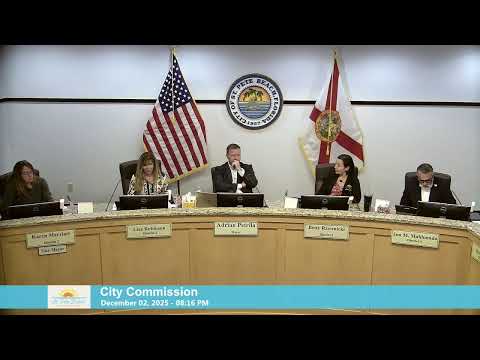
City staff gave a detailed update on storm recovery work, FEMA-related claims and permit activity at the St. Pete Beach City Commission meeting. Community development staff said Pinellas Recovers has held pop-up offices across the county and maintains two permanent locations in Clearwater and St. Petersburg to help residents apply for recovery funding. Staff urged residents to contact Pinellas Recovers directly or ask to be placed on a wait list if they did not receive a notice.
The commission heard that the total valuation of recovery-related permits to date is more than $375,000,000; staff said permit fees waived total just over $3,700,000 and fees collected total just over $44,000,000. Staff also reported a FEMA claim estimate for repairs in St. Pete Beach at approximately $200,000,000. Community development staff noted the city hired seven limited-term permit technicians in April and issued an RFP for temporary community-development personnel to handle both emergency and non-emergency workloads.
Commissioners pressed staff about permit processing metrics after staff presented average issuance times (for example, an average of nine days for demolition permits). Laura (community development director) explained the averages are calculated manually from an Excel export of issued permits, using application and issuance dates and removing outliers; several commissioners and commenters said many applicants are still waiting substantially longer than those averages and urged staff to publish a clearer breakdown. One commissioner recommended a postmortem or “hot wash” with Elevate Florida recipients to identify and share lessons learned with other applicants.
Staff also described recent operational changes that support recovery work: the city removed a look-back period for substantial improvement/substantial damage determinations in December, initiated a volunteer program to assist recovery efforts, temporarily reduced permit fees in April, and signed on with Forerunner damage-assessment software to streamline damage assessment and future flood-plain management work. Camden Mills, public services director, told the commission the city’s five-year capital-improvement plan identifies roughly $213 million in projects for 2026–2030, with $58 million budgeted for fiscal 2026 and outer years currently unfunded.
What’s next: staff said they will provide more granular permit-timing data and follow up on inconsistencies raised by commissioners; they will continue Forerunner training and bring additional CIP details in future commission updates.