
HHS says capital 'stack' now covers late-added federally required element; Manchester property sale not relied on for build
Get AI-powered insights, summaries, and transcripts
Subscribe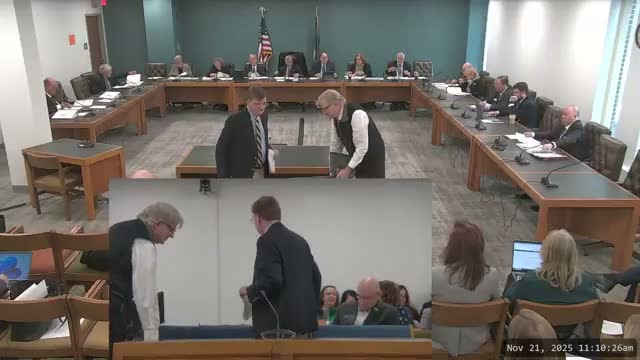
Summary
Health and Human Services Commissioner Laurie Weaver told the Fiscal Committee the agency reassembled a capital funding stack after bids left insufficient money to fund a federally required element; the agency said sale proceeds from existing property are speculative and not counted on to finish construction.
Commissioner Laurie Weaver of the Department of Health and Human Services told the Fiscal Committee that a federally required element was added late in the capital project and that the agency had to adjust its funding approach after bids left the project short.
"We didn't have enough money to do the project," Weaver said, describing how the agency used add alternates and combined funding sources after legislation this session lifted a restriction that had limited how certain funds could be used. "We have just enough to squeak by, that we can add this in at this time," she said.
Senator Reardon and other members pressed Weaver on why the federally required element was being funded this far into the project. Weaver said the agency had signaled it might return to the committee and that lifting the funding restriction allowed the use of general funds and capital-project balances to complete work not covered in original bids.
Senator Waters asked whether revenue from a planned sale of existing property (the Manchester property; also referenced as Hampstead in discussion) would be used to fund the build. Weaver and Commissioner Arlinghaus said the state was not counting on proceeds from that sale to finance construction: the property sale process will be complicated, estimates of sale proceeds are speculative, and the state will not close on a sale while residents remain on the property.
Weaver said the agency has sufficient funds to reach an occupancy target of about a year from now and that the sale is being pursued separately; she called the capital-stacking work "exceptional" in bringing together multiple funding sources.
The committee approved the HHS item at tab 5.
Next steps: agency staff will proceed with the construction schedule using the newly assembled funds and will work with a broker and the governor's office on any property sale; committee members requested agencies cite enabling legislation when a new statutory duty creates a budget obligation.