Get Full Government Meeting Transcripts, Videos, & Alerts Forever!
Get email alerts on the Transportation Safety topic
No spam. Unsubscribe anytime.
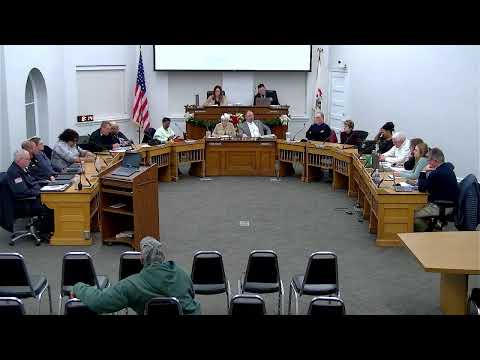
Freeport council adopts Safe Streets plan to target corridors with concentrated severe crashes
Summary
The City of Freeport adopted a Safe Streets for All safety action plan to target streets responsible for most severe crashes and make the city eligible for federal implementation grants; council approved the plan 7–1.
The Freeport City Council on Monday adopted the city’s Safe Streets for All safety action plan, a data-driven strategy designed to reduce serious crashes and make the city eligible for federal implementation funding.
Matthew Dirdall, project manager at Alta Planning and Design, told the council the plan uses a "safe system" framework to identify where crashes are concentrated. "About 9% of streets in Freeport account for about 60 percent of severe crashes," he said, and the plan identifies five priority locations: Adams, Cherry, the Empire-and-Walnut intersection, Kiwanis Drive and Stevenson Street. Dirdall also said the planning process included walk audits, an online survey and an open house that engaged more than 150 residents.
Manager Boyer and city staff urged adoption to position Freeport for implementation grants. Darren (city staff) explained that several IDOT corridors were flagged in the analysis and that coordination with the Illinois Department of Transportation will be important to secure treatments on state-controlled roads. Boyer said adoption carries no direct cost and primarily enables the city to "chase implementation money."
Council members exchanged questions about costs and local impacts. Alderman Stacy asked what the plan would cost Freeport to implement; Darren said adoption itself costs $0, and implementation funding is pursued through grants that often require a local match. He gave a ballpark example that a complex intersection renovation could cost roughly $2,000,000 and noted many IDOT grants use an 80/20 match that helps make large projects feasible.
The council voted to adopt Resolution 2025-143, which formalizes the safety action plan, by a 7–1 margin.
The council also discussed next steps in the plan’s implementation, including a staff-led implementation workshop and assigning "champions" to carry projects forward and annual tracking of outcomes.