
Pulaski County schools win full accreditation; board reviews attendance and special‑education scheduling
Get AI-powered insights, summaries, and transcripts
Subscribe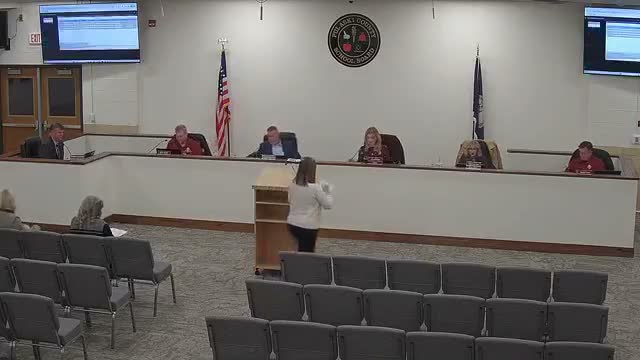
Summary
The Pulaski County School Board announced full district accreditation and discussed attendance, behavior trends and special‑education scheduling rules that preserve federal IDEA timelines, while staff outlined plans for targeted support and next steps.
Pulaski County School Board members on Dec. 16 celebrated the district’s return to full accreditation and heard staff outline steps to address attendance, student behavior and special‑education scheduling that staff say protect federal timelines.
Superintendent Graham announced the district and most schools are fully accredited under the state framework, noting the division- and school-level framework scores are generally “in the eighties” and that Pulaski County High School posted a framework score of 98.1. “We are fully accredited,” Superintendent Graham said, praising administrators, teachers and community partners for the improvement.
The board discussed subgroup performance that produced targeted-support designations for Pulaski Elementary and Dublin Elementary. Staff said the district’s performance for students with disabilities fell below the framework threshold, which moved those schools into the targeted-support process; administrators said they have a plan to raise those outcomes and cited recent principal and staff work already underway.
District budget staff told the board revenues were slightly under projections and that all major expenditure categories were under budget except technology, which requires a budget adjustment; the district also expects a reimbursement of “over $1,000,000” that has been delayed by a federal government shutdown, staff said.
Board members pressed staff on attendance and behavior trends. A staff presenter said chronic absenteeism has declined even while discipline incidents remain a concern, and described common incident types as “disruptions, disrespect, defiance, [and] social media stuff.” Board members noted a possible correlation between improved attendance and a rise in certain behavioral incidents as more students return to classrooms.
On special education, Dr. Volcha explained how the district uses several weather/closure ‘codes’ to determine whether eligibility and IEP meetings proceed, move to virtual platforms, or are excused without penalty to federal timelines. Dr. Volcha said code 0 days (full closure) can be excused and push timelines, while code 1 or code 2 conditions allow virtual meetings or rescheduling so the district remains compliant with IDEA. “If we miss a snow day, particularly in a heavy month like January, it is a barrier to rescheduling and getting everything back on track,” Dr. Volcha said, describing January as a heavy month for eligibility and IEP meetings.
Student representative Amaya Hillham provided a brief student report, saying the schools had nearly a week-long break, finals were canceled this week and the high school’s Commit to Graduate assembly included thousands of dollars in student awards; a Red Cross blood drive drew roughly 50 donors.
The board said it will share accreditation details with the community and hold a post‑break celebration. Administrators said they will continue targeted efforts to raise subgroup performance and monitor attendance and discipline trends.
The board’s next procedural step is a reorganizational meeting scheduled for Jan. 13; students return for the second semester on Jan. 7.