
Educators ask state for MSOC funding, mandate relief and easier bond rules
Get AI-powered insights, summaries, and transcripts
Subscribe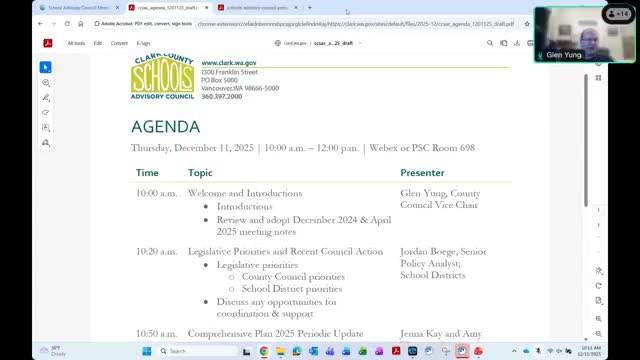
Summary
Regional education leaders, led by Mike Nerland of ESD 112, asked legislators to fully fund materials, supplies and operating costs (MSOC), prioritize foundational early literacy and math, address unfunded mandates, and consider changing the bond supermajority requirement to help districts modernize aging facilities.
Mike Nerland, assistant superintendent at ESD 112, presented four legislative priorities the superintendents in the region endorsed: full funding for materials, supplies and operating costs (MSOC); greater emphasis and flexibility to support foundational skills (reading, writing, math) from early grades; relief or reconsideration of recent unfunded mandates that require districts to use local levy dollars for compliance work; and capital requests to modernize aging school facilities, including a request to reduce the bond approval threshold from a 60% supermajority to a simple majority.
Nerland said MSOC covers costs such as transportation, safety and security equipment, utilities and insurance; districts increasingly must shift levy dollars away from classroom programs to cover those expenses. He urged flexibility in state-required professional-learning days so districts can target that time toward early-literacy and math instruction.
Dr. Christine Maloney, superintendent of Evergreen Public Schools, described immediate budget pressures in her district: she said Evergreen faces roughly $12 million in cuts this year and $26 million over the next three years, highlighted rising insurance costs (which she said doubled in recent years) and urged policy changes to reduce the burden of unfunded mandates so districts can protect classroom programs and special-education services.
District representatives also discussed impact fees and equity in capital funding. ESD and local superintendents asked the county and state to consider mechanisms that better enable small districts to access modernization funding, including the small-school modernization pilot program and reforms to how impact fees can be used.
Nerland offered to share the written legislative priorities with council staff and attendees for follow-up with the county’s delegation.