Get Full Government Meeting Transcripts, Videos, & Alerts Forever!
Get email alerts on the Capital Improvements topic
No spam. Unsubscribe anytime.
Planning commission reviews $152.8 million five‑year CIP, endorses housing trust fund proposal
Summary
County staff presented a recommended FY27 Capital Improvement Plan totaling about $152.8 million over five years and proposed a $500,000 initial allocation from Colonial Downs revenues to establish a housing trust fund for workforce housing; commissioners discussed school projects, a new courthouse and utility priorities.
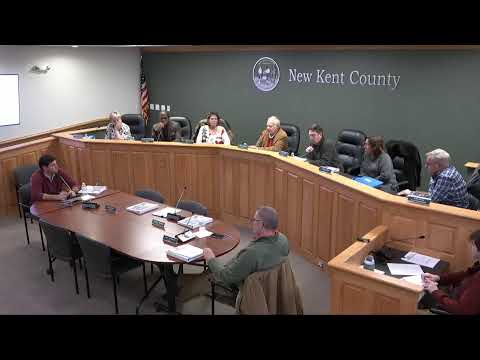
New Kent County staff presented their recommended FY27 Capital Improvement Plan (CIP) to the Planning Commission on Dec. 15, outlining a five‑year program and specific projects that officials say aim to address growing infrastructure and facility needs.
"Capital improvement plan is a strategic planning tool," said Mr. Hathaway, who presented the package. He told commissioners the total five‑year county capital plan is $152,796,574 and that the FY27 county capital request is approximately $152,000,000, with about $7,200,000 proposed to come from the county's capital fund balance.
The presentation divided requests into county capital projects, public utility projects (funded solely from utility user fees) and departmental requests. Highlights included airport work (an FAA‑required off‑airport obstruction removal project and equipment rehabilitation), a proposed new courthouse and a range of school system projects.
Hathaway described the courthouse plan as an anticipated $70,000,000 project that would be financed through borrowing rather than drawn from capital fund balance, with renovation of the existing courthouse reused for administration once the new facility is built.
Schools account for a significant portion of the requests. Hathaway said roughly half of the fund balance commitment for FY27 is school‑related, with requests that include bus replacements ($672,000), phased roof work at New Kent High School ($280,139 for the final phase), a 1:1 Chromebook leasing program ($300,000 annually), district paving ($100,000) and a requested elementary school replacement priced at $58,000,000 to be financed by borrowing.
On utilities, staff proposed a 2,000,000‑gallon water tank in the Brookshire area (estimated $10,500,000) to address low‑pressure capacity issues and a water‑system interconnection to create a more resilient loop linking several systems.
The packet also included a recommendation from the Housing Advisory Committee to create a New Kent Housing Trust Fund. "We see setting aside a portion of our Rosie's revenue, Colonial Downs revenue, and dedicating that to housing opportunities," Hathaway said, describing proposed uses such as down‑payment and closing‑cost assistance, home rehabilitation for seniors, and incentives aimed at producing workforce housing for teachers, deputies and firefighters. He said an initial $500,000 allocation was proposed for FY27 drawn from Colonial Downs revenues and that a formal program and policy would be developed for Board review.
Commissioners pressed staff on whether the trust fund would redirect existing revenue streams and whether those funds could become ongoing taxpayer obligations. Hathaway responded that Colonial Downs (Rosie's) funds have been used for capital in the past, cited a Colonial Downs fund balance of about $28,000,000 as of June 30, 2025, and said the proposed $500,000 would not affect operating budgets.
Commissioners also asked staff to coordinate the trust fund with state and federal housing programs and recommended hiring a housing coordinator to help residents access grants and assistance. Commissioners raised implementation questions about targeting locations for new workforce housing and ensuring utilities and other infrastructure are in place to support new development in identified growth areas.
Hathaway said staff will return to the Planning Commission in the period when the CIP is advertised for public hearing and that the timeline allows for the commission to advise whether to hold a public hearing in January or delay to February; final budget adoption would follow the board's public hearing and state code timing.
Next steps: staff will provide materials for the Planning Commission’s review ahead of the advertised public hearing period; the commission will consider the CIP and, if appropriate, forward a recommendation to the Board of Supervisors.