
Texas Supreme Court Hears Appeal Over Uvalde County’s Liability in Robb Elementary Shooting
Get AI-powered insights, summaries, and transcripts
Subscribe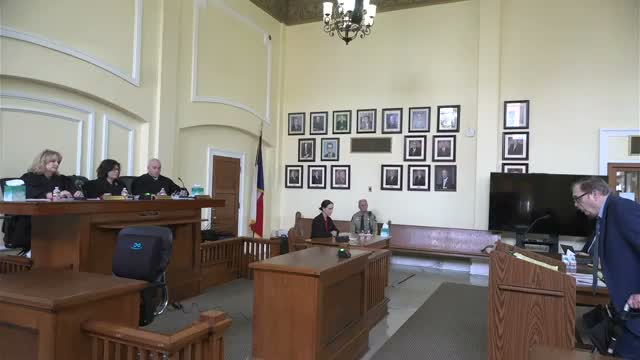
Summary
At oral argument, plaintiffs told the Texas Supreme Court they rely on the Department of Justice critical-incident report and say defective radios and delayed implementation of active-shooter protocol prolonged the 2019 Robb Elementary attack; Uvalde County counsel argues sovereign-immunity exceptions bar liability.
The Supreme Court of Texas heard oral argument in an appeal over whether Uvalde County and other government entities can be sued under the Texas Tort Claims Act for failures during the Robb Elementary School shooting on March 24, 2019.
Plaintiffs’ counsel, identified in the record as Mister Williams, told the court the case ‘‘arises from the tragedy at Robb Elementary School’’ and that the parties rely on a Department of Justice critical-incident report. Williams argued the crux of the appeal is statutory: whether the Texas Tort Claims Act’s ‘‘use/nonuse’’ and defective tangible-property standards allow suit against government entities for what plaintiffs call failures to implement active-shooter protocol.
Why it matters: The appeal asks whether government operational decisions and equipment failures during an active-shooter event are shielded by sovereign immunity under the state statute or are actionable when they amount to a failure to follow required protocols. Plaintiffs say the answer determines whether survivors and families may recover for harms they tie to extended delay.
Williams told the justices the DOJ report shows on-scene law enforcement ‘‘failed miserably in their implementation of what is called active shooter protocol’’ and that radios ‘‘did not work inside the building.’’ He disputed a manufacturer’s assertion that the radios were never intended to work indoors, calling that claim ‘‘the most ridiculous argument that anybody’s ever made.’’ Williams said the inability of officers to communicate prevented the establishment of an incident commander and delayed a forcible breach.
A frequent factual point in argument was the duration of the hostage situation in classroom 111. Williams emphasized that plaintiffs’ theory rests in part on timing: he contrasted ‘‘77 minutes’’ that the plaintiffs say children were under siege with the border-patrol units’ arrival and breach in roughly 10 minutes when those officers had functioning radios. ‘‘If that law-enforcement agency is able to use their radios that work and then to implement the shooter protocol to take out the shooter in less than 10 minutes, why were the people who couldn't talk to each other waiting?’’ he asked.
Defense counsel Charles Figurio, speaking for Uvalde County, countered that the complaint invokes exceptions to waiver of sovereign immunity and that controlling precedent limits liability for ‘‘methods of providing police protection.’’ Figurio asked the court to consider cases such as Naomi Robinson v. City of San Antonio and City of Dallas v. Sanchez in assessing whether the county’s operational decisions fall within statutory immunity. He also argued the plaintiffs have separate product-liability litigation against manufacturers and that the present suit, as pleaded, targets governmental decisions.
The justices pressed both lawyers on where the statutory line should fall between discretionary policy choices and required operational responses. At several points the court asked whether the radios were owned or controlled by the county and whether proving ownership is necessary to establish TTCA claims; counsel said discovery and pleading strategy led plaintiffs to separate product claims from government claims and that ownership is not strictly required by their theory.
Procedure and next steps: During argument Williams told the court he had filed a motion for continuance because of recent medical treatment; the transcript does not indicate an immediate ruling on that motion. At the conclusion of oral argument the court recessed and announced the case "will be submitted" for decision. No ruling on the merits was handed down from the bench during the session recorded in the transcript.
What was cited: The arguments invoked the Texas Tort Claims Act, the Department of Justice critical-incident report on the Robb Elementary shooting, and appellate precedent including cases the parties discussed as bearing on immunity and proximate cause.
The case was submitted after oral argument; the court’s written decision will determine whether plaintiffs may proceed against Uvalde County under the statutory framework or whether sovereign-immunity doctrines preclude the suit.