
APS board accepts Advanced Placement monitoring report after detailed questioning on access and supports
Get AI-powered insights, summaries, and transcripts
Subscribe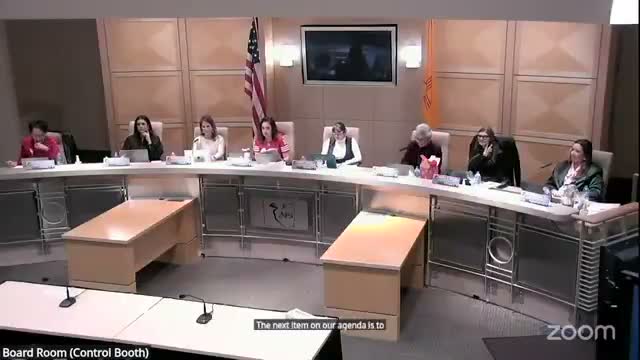
Summary
The Albuquerque Public Schools Board accepted a progress monitoring report on its interim AP goal (3.3) after extended questioning about access for students with disabilities, counselor capacity and school-by-school disparities. The board voted unanimously to accept the report.
The Albuquerque Public Schools Board of Education voted unanimously Dec. 17 to accept the district's progress monitoring report for interim goal 3.3, which aims to increase the percentage of 11th-grade students earning credit in at least one Advanced Placement (AP) course from 40.7% in May 2024 to 46.7% by May 2027.
The vote followed a sustained monitoring conversation in which board members pressed the administration for concrete strategies to expand AP access and completion, particularly for students with disabilities and historically marginalized groups. Member Tom Morito asked about a reported 11.8% AP-credit rate for students with disabilities and what actions would increase that figure. Superintendent Gabriela Duran Blakey said the district is working to build AP teachers' capacity to scaffold rigorous content, to embed AP opportunities into individualized education program (IEP) conversations at the high-school level and to partner with Freshman Academy teams to identify students with "AP potential" using PSAT data and other measures.
Board members raised several recurring concerns: whether classroom grades (in APS a D or higher may yield course credit) reliably reflect AP learning and future college/career readiness; school-level disparities in which AP courses are offered; counselor capacity to provide advisement and transcript reviews; and strategies to normalize AP enrollment rather than gatekeep it. In response, administrators described a multimeasure approach: PSAT as one predictor but combined with teacher, parent and student voice, placement reports, master scheduling to avoid conflicts with mandated services, and individualized student support delivered by student success/resource teachers.
Members also discussed equity strategies to broaden participation among Martinez-Yazzie-impacted students and Native American students: offering culturally relevant AP options where possible, using virtual offerings or district hubs (CEC) when a school cannot staff an AP section, and training counselors to proactively invite students and families. Administration said some schools already include interventions and professional development in their 90-day improvement plans and that counselor training and early-warning indicator systems are being rolled out.
The board framed acceptance of the monitoring report as an acknowledgment that the district documented growth toward the interim goal and presented a sufficient strategy for continued progress. The motion to accept was made by Secretary Astorga and seconded by Member Benavides; the roll call vote was unanimous.
The board directed staff to provide follow-up data and clarifications requested during the conversation, including intersectional breakdowns and the specifics of implementation timelines for counselor training and early-warning systems. The district plans to continue monitoring and report back as part of routine progress updates.