Town outlines solid-waste RFP timeline and says school district inclusion risks higher bills
Loading...
Summary
Town staff presented the draft RFP timeline for Windsor's exclusive solid-waste franchise and outlined fees that drive residential and public-entity rates. District officials pressed how including Windsor Unified in the town bill could add roughly $650,000–$700,000 a year to the district's budget and discussed legal exposure under Proposition 218.
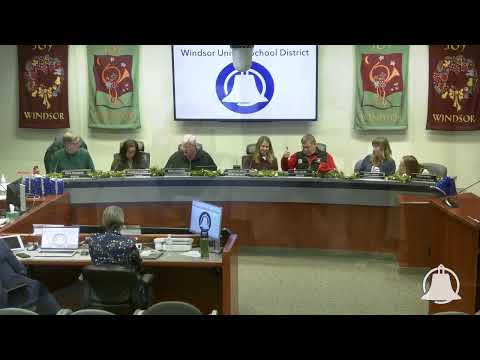
Town of Windsor staff outlined the community process and timeline for a new exclusive solid-waste franchise agreement during the school board meeting, saying the town plans to release an RFP in February and expects proposal evaluations and interviews between April and July ahead of a contract that would begin in 2027.
"The town currently has a total of 5 solid waste franchise agreements, but tonight we're solely gonna focus on our exclusive agreement," Christina Owens, governmental operations manager for Windsor, told the board during a jointpresentation with Town Manager John Davis. Owens explained the rate foundations that haulers must include: landfill/transfer-station disposal fees set by the county, organics-processing fees from 0 Waste Sonoma (driven by state law such as SB 1383), recycling-processing costs, base collection costs and elective services such as street sweeping or oil collection.
Why it matters to Windsor Unified: Owens and district officials flagged that when a municipality subsidizes public entities' service (for example, rolling the school district and fire district cost into ratepayers' bills), the town faces a Proposition 218 process and potential legal challenges if protests are filed. "When we subsidize rates, it does trigger the Proposition 218 process," Owens said, describing notice and protest rights that could lead to litigation even if a vote succeeds.
Superintendent Decker said the district currently spends about $657,000–$680,000 per year on the services covered by the exclusive contract and that amount would grow with yearly escalators. "That would be $650,000 plus," Decker said when asked for a ballpark.
Board members and town staff discussed options the district could pursue: remain a participant in the town's franchise contract, negotiate a separate school contract (including piggybacking on other school districts' agreements), or self-haul some services. Owens emphasized the limited levers a municipality can use to reduce rates, because many costs are set by other agreements (e.g., the county's landfill master operating agreement).
The town staff presentation did not seek a Windsor Unified board vote; it was informational and intended to put the district on notice so schools and the town can coordinate during the RFP process. Owens said the town will be providing a draft RFP to stakeholders in January and hoped to present to the town council in February for release.