Get Full Government Meeting Transcripts, Videos, & Alerts Forever!
Get email alerts on the County Budget topic
No spam. Unsubscribe anytime.
Wright County presents 5.57% preliminary levy; resident calls rising property taxes "unsustainable"
Summary
At a Dec. 11 Truth in Taxation meeting, Wright County staff presented a 5.57% preliminary county levy and budget overview. A Monticello resident urged deep cuts, saying his property taxes rose 44% in five years; county leaders pointed to unfunded state mandates, rising benefits and pension costs as key drivers.
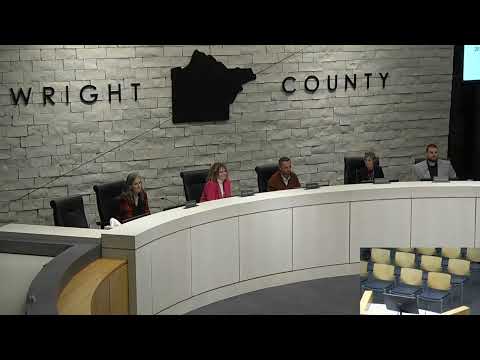
Wright County officials on Dec. 11 presented a preliminary county levy of 5.57% and a budget overview at a Truth in Taxation public meeting, and a resident urged the board to take sharper action to curb what he described as rapidly rising property-tax burdens.
Administrator Kreiser summarized the county's budget process and strategic priorities, told the room the preliminary levy was set in September and reminded attendees that the board will consider final levy certification at its Dec. 16 meeting. Kreiser said about 47% of county revenue comes from property taxes and highlighted cost pressures including a recent 14% rise in employee health-insurance costs, open union contracts under negotiation and potential state cost shifts tied to a projected Minnesota biennial deficit of more than $2 billion.
A public commenter, James Vanderlinden of Monticello, said his property taxes have risen 44% over the past five years and called that trajectory "not sustainable," urging the county to cut nonessential services, freeze hiring and consider outsourcing or reorganizing staff. "My property taxes have increased over 44% in the last 5 years," Vanderlinden said, adding that many residents on fixed incomes are struggling.
County officials pushed back on simple-cut proposals by pointing to legal and service constraints. Kreiser and board members said many functions are mandated by state law — for example, out-of-home child placements — and that reducing personnel in areas like deputies or social services could either degrade services or trigger penalties or higher costs if the state intervenes. Kreiser also described challenges in operations, calling out an aging Human Services case-management system dating to the late 1980s that consumes staff time and contributes to cost pressures.
Officials gave examples of per-capita county spending to illustrate where levy dollars are spent: about $11.78 per person per month for sheriff services, $1.30 per month for the county's share of the Great River Regional Library, $1.30 for parks and trails, $3.06 for highways and $1.38 for public-health promotion services; finance and social services were listed at $8.13 per person per month. Staff also presented estimated county-only tax impacts on median homes in several cities (county portion examples included roughly $50.09 in one community and a countywide median impact of $35.08).
Board members and staff described personnel costs — wages, benefits and pension contributions such as PERA — as the single largest driver of the county budget, together accounting for roughly 48–49% of county expenses. They said bargaining usually relies on market comparables from neighboring counties and that proposals from any single peer county can affect negotiations across the region.
Kreiser described steps taken to limit the levy: vacancy savings, cuts to the proposed capital improvement program and recognizing $1.8 million in bond proceeds in FY26 that will affect FY27 accounting. He told attendees the administration worked to reduce an initial staff proposal around 14% down to the 5.57% preliminary figure presented earlier.
The meeting closed after a wider exchange in which residents pressed for greater fiscal restraint and commissioners reiterated the tension between reducing local taxes and meeting state-mandated responsibilities. The board will consider certifying the final levy at its Dec. 16 county board meeting.