Get Full Government Meeting Transcripts, Videos, & Alerts Forever!
Get email alerts on the Growth Policy 2025 topic
No spam. Unsubscribe anytime.
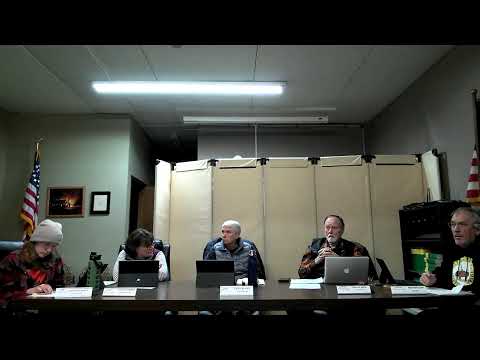
Council weighs Stevensville Growth Policy 2025; debate centers on map pinpoints and project listings
Summary
Council considered Resolution 577 to adopt the Stevensville Growth Policy 2025, funded by a $30,000 Department of Commerce grant; council members criticized incorrect map pinpoints and the inclusion of specific projects, and a motion to table for legal review failed. The roll call begins in the transcript but the final tally is not recorded.
The Stevensville Town Council opened a vote on Resolution 577 to adopt the Stevensville Growth Policy 2025, a planning document the town’s planning board and consultants recommended for adoption. Planning staff and a Department of Commerce representative said the policy was funded by a $30,000 House Bill 2 grant and prepared with assistance from Great West Engineering.
Council member Ramos raised substantive objections to map ‘‘pinpoints’’ he said were incorrectly placed (referencing page 111 of the agenda packet) and questioned the policy’s inclusion of specific project tasks (page 58). ‘‘Those pinpoints are still down on the river bottom… and that is misinformation going out to the public,’’ Ramos said, arguing the map and some project-level items did not belong in a high-level growth policy and asking that the council defer adoption until legal questions about board-member residency and map accuracy could be resolved.
A motion to table the resolution until Jan. 22 so the town attorney could examine residency and legal issues was moved but failed. Several council members and staff defended the process and the outreach period: a Department of Commerce representative, identified as Danny, said the project was funded by the state and that the policy will position the town to be more competitive for infrastructure grants.
Kevin of Great West Engineering read an email from airport manager Brian Germaine clarifying the airport section: the town secured full funding for a new 12,000-gallon self-serve fuel farm with construction expected in 2026, planned pavement maintenance, and development of a strategy for town-owned T-hangars in 2027 to generate rental revenue.
During the roll call recorded in the transcript, Council member Wright voted ‘‘Aye,’’ Barker voted ‘‘Aye,’’ and Brown voted ‘‘No’’ citing map errors. The transcript ends as Council member Smith was about to be called; the final tally and formal outcome of the resolution are not recorded in the provided transcript.
What happens next: the council may complete the roll call and adopt or reject Resolution 577 in the same meeting (transcript ends before final result) or schedule further review if legal issues are raised and accepted. The policy’s adoption would affect the town’s eligibility and competitiveness for state and federal grants and guide future infrastructure priorities.