
Teachers at Duluth listening session accuse local union leadership of conflicts of interest; union critic disputed
Get AI-powered insights, summaries, and transcripts
Subscribe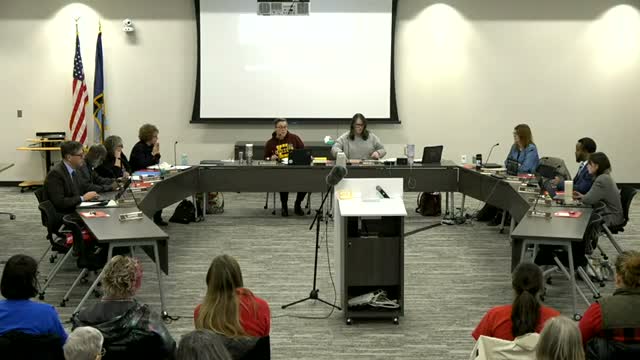
Summary
Two teachers at a Duluth Public Schools listening session alleged the Duluth Federation of Teachers (DFT) violated federal labor rules and has long-standing conflicts of interest tied to investments and a retirement-fund property sale; a fellow teacher disputed those charges and called the criticism "propaganda."
Two teachers at a Duluth Public Schools listening session on December raised allegations that the Duluth Federation of Teachers (DFT) has longstanding conflicts of interest tied to its governance and investments.
"My local public sector teachers union, the Duluth Federation of Teachers, has a serious conflict of interest," said Steven Sandberg, a special-education teacher and member of the union. Sandberg told the board the DFT's internal election committee had privately acknowledged violations of federal labor laws and that the committee and leadership had been violating those laws for seven years. He said the union manages "roughly 4,700,000 in assets" and traced a pattern of what he called cronyism to a 2014 transaction in which a teacher who served concurrently as DFT treasurer and an executive board member of the Duluth Teacher Retirement Fund Association (DTRFA) helped move a commercial property into DFT ownership. Sandberg said the DTRFA was a $220,000,000 entity and that the treasurer went on to earn "over 325,000" in the following decade as DFT treasurer.
Sarah Sandberg, who also identified herself as a teacher and union member, reinforced those concerns and urged the board and community to press for "truly open negotiations" between the DFT and the district. "Open negotiations are a win for everyone," she said, framing public bargaining as a way to ensure rank-and-file teachers and students are heard.
Not all speakers accepted the allegations. Jim Jubinville, a special-education teacher and co‑facilitator of the district’s labor‑management teams, responded directly to the critics: "Please don't fall for their propaganda," he said, characterizing the group opposing DFT leadership as a small faction that repeatedly lost internal elections. Jubinville also said the labor‑management process was not followed in planning the ALC 1st Street build‑out and asked the board or the Minnesota Bureau of Mediation Services to intervene to resolve the space-allocation dispute.
The listening session record contains assertions but no formal evidence presented to the board at the meeting: Sandberg described union asset figures, a 2014 sale involving the DTRFA and claims that Education Minnesota staff took actions related to internal union complaints, but he did not present documentation in the session. Jubinville disputed the characterization of the critics and framed their messaging as partisan within the union.
What happens next: Speakers asked the board to seek greater transparency in collective‑bargaining processes and for legislative conflict‑of‑interest protections for public‑sector union negotiations. The board did not take formal action on these requests during the listening session.