Enerhealth Executive Says Population-Based Payment Pilot Could Cut Avoidable Hospital Admissions
Loading...
Summary
Dr. Clark of Enerhealth told the committee that assigning financial risk for a defined population and hitting a cost target would align incentives to prevent avoidable admissions for conditions such as heart failure and diabetes, arguing upstream care lowers costs and improves outcomes.
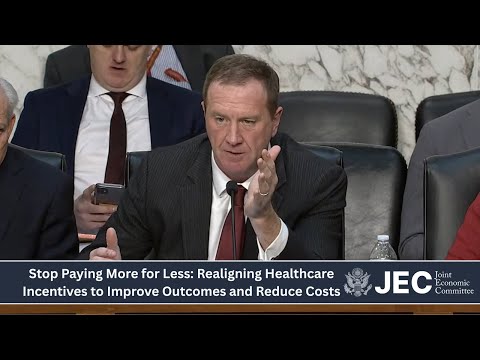
Dr. Clark, identified in the transcript as speaking "from Enerhealth's perspective," told the Joint Economic Committee that her organization owns hospitals, medical groups and insurance plans and that taking risk across a population can remove perverse utilization incentives. "We want to take a risk on the overall population," she said, describing a pilot in which Enerhealth would be accountable for hitting a cost target for a defined group.
She argued that when a provider organization bears population risk, it has less incentive to generate admissions for avoidable conditions and more incentive to invest in primary care and specialty care that prevent costly hospitalizations. "Having us be responsible for ... hitting a cost target for that population is where we want to go because it doesn't...benefit us to keep them from getting admitted, especially for avoidable conditions such as heart failure, diabetes related cost, CKD," she told the committee.
Dr. Clark framed the approach as both a clinical and financial strategy: better upstream care for chronic conditions would improve member health while reducing total costs paid by the plan. The transcript records the company framing this as a pilot proposal rather than a finalized contract or program; no formal committee action or vote occurred on the proposal during the segment.