
Witnesses Tell Committee ACA Marketplaces Need Stronger Verification, Subsidies Tied to Tax Returns
Get AI-powered insights, summaries, and transcripts
Subscribe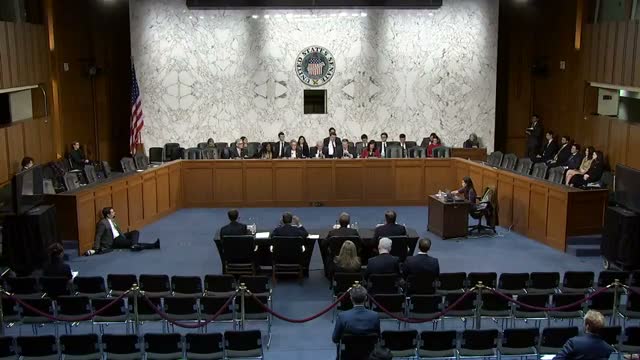
Summary
At a Joint Economic Committee session, Mr. Roy cited a GAO report on exchange program integrity and recommended subsidies be based on prior-year IRS returns rather than applicants’ projected income; senators pressed on alleged fraud and verification gaps for Social Security numbers and immigration status.
An unidentified senator pressed Mr. Roy during a Joint Economic Committee hearing about verification gaps in Affordable Care Act marketplaces, saying "Obamacare's been a disaster for working families" and asserting that in Missouri premiums are "up over 200%" while "insurance profits are up over 1000 percent." The senator asked how exchanges could stop applicants from enrolling without verifying every family member's immigration status.
Mr. Roy, responding, cited a recent GAO report that raised program-integrity concerns about income and ID verification in the ACA exchanges and said those same weaknesses affect immigration-status checks. "If you have a robust system for program integrity where you're verifying people's Social Security numbers, that should address immigration status because those two things go together," he said.
Mr. Roy recommended an operational change to subsidies: "it would be much better for ACA subsidies to be based on your previous year's IRS returns rather than some honor system of what you think your future income would be," arguing that the current practice of estimating future monthly income creates collection and overpayment challenges.
He also told the committee that many program-integrity measures are within the executive branch's existing authority, noting that CMS and HHS have program-integrity divisions and that states operating their own exchanges may require tailored procedures. He characterized the verification challenge as "pretty solvable" while acknowledging implementation complexity across federal and state exchanges.
The senator raised a reported figure he recalled as a "97 percent fraud rate" and asked about steps to prevent fictitious names or Social Security numbers from being used to enroll; Mr. Roy said stronger verification and the use of prior-year tax data could reduce improper enrollments. The hearing segment did not produce legislation or a formal vote; witnesses and senators left the verification and subsidy recommendations as options for policymakers to consider.