Get Full Government Meeting Transcripts, Videos, & Alerts Forever!
Get email alerts on the Public Land Management topic
No spam. Unsubscribe anytime.
Commission splits over BLM Dolores travel plan letter but approves sending edited scoping comments
Summary
Public advocates, planning staff and commissioners debated the BLM Dolores Travel Management Plan scoping letter, with some urging stronger riparian protections and others warning the draft would lead to widespread closures; the commission approved sending a refined letter asking the BLM to treat buffer percentages as guidelines and to account for topography and connectivity.
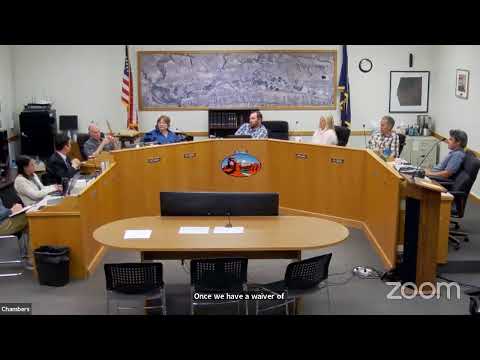
Grand County commissioners spent an extended portion of their June meeting debating a draft scoping comment letter to the Bureau of Land Management on the Dolores River Travel Management Plan (TMP).
Public commenters including Cliff Koons of Ride with Respect urged the BLM and county to "recognize the past work" on travel management and to avoid blanket riparian exclusions that could close large swathes of routes; Koons asked the BLM to replace black‑and‑white statements with locally sensitive, topography‑aware guidance. Several commissioners and members of the public disputed draft buffer percentages and said that, in places, the proposals could shut access to historic and locally used routes.
Other commissioners and staff defended the letter as a balanced early‑stage comment, saying the scoping period seeks high‑level guidance rather than route‑level decisions and that the county should request that the BLM use buffers as a starting point while explicitly accounting for topography and existing route networks. One commissioner asked staff to produce GIS maps showing changes since 2008 to ground the discussion in data.
After lengthy discussion, the commission approved submitting the scoping letter with edits: staff will clarify the riparian language (either to specify limited crossings or to remove overly prescriptive wording) and will present the proposed buffer percentages as nonbinding guidelines that the BLM should refine with topographic analysis. The county will also request additional public and stakeholder engagement as the BLM develops alternatives.
The exchange highlighted a recurring local tension—how to balance motorized access, visitor experience and wildlife/river protections—and commissioners signaled they will continue to refine the county’s position in later comment periods when the BLM publishes alternatives.