
Kerr County readies SB3 siren program; UGRA outlines rapid rollout and system engineering needs
Get AI-powered insights, summaries, and transcripts
Subscribe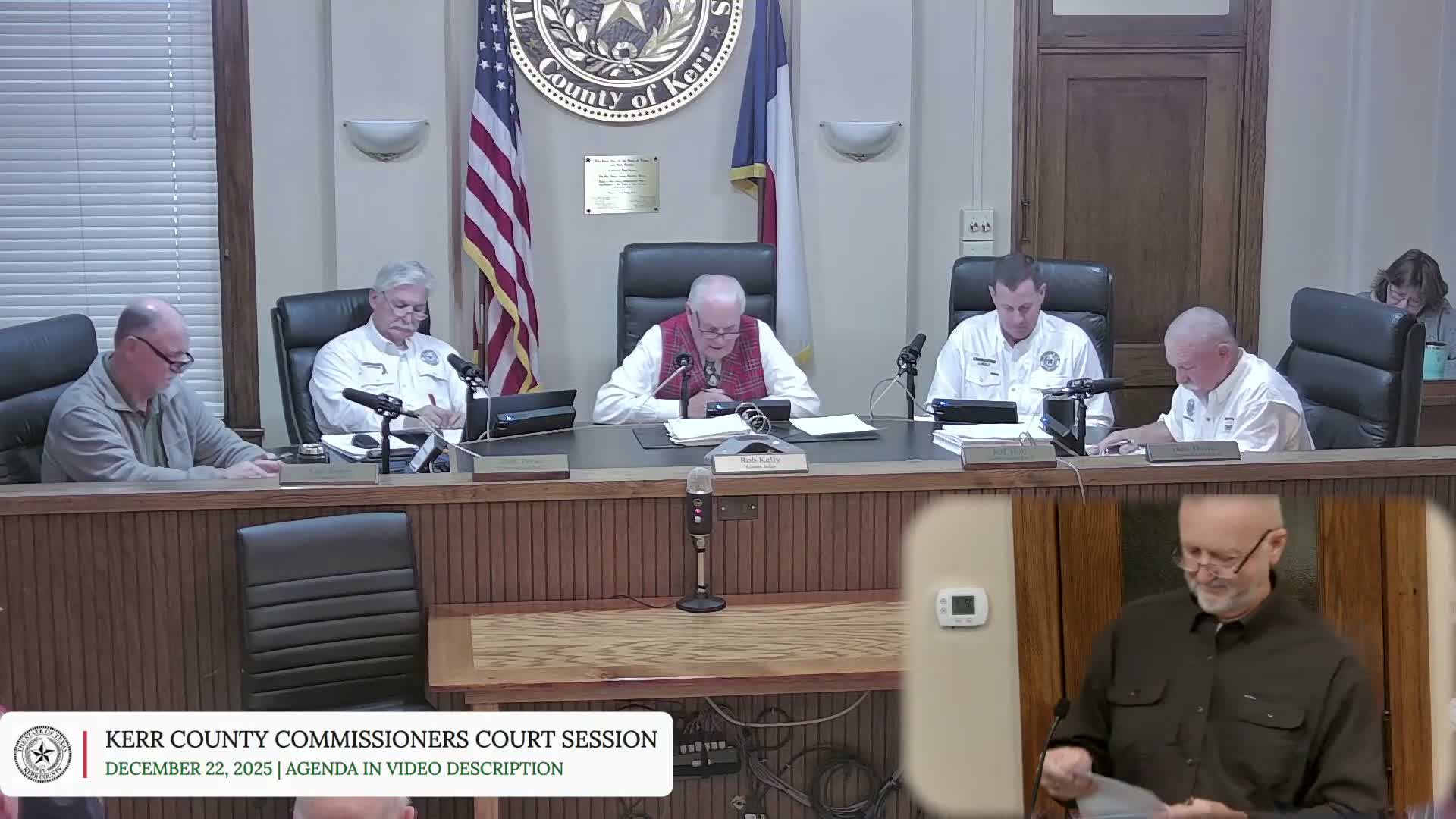
Summary
Kerr County commissioners heard an SB3 update Dec. 22 from Upper Guadalupe River Authority staff who said the Texas Water Development Board authorized automatic $1 million allocations to affected counties and discretionary funds, and urged early systems engineering to ensure sirens, gauges and dashboard interoperate before installations begin.
Kerr County Commissioners Court on Dec. 22 received detailed planning updates for an outdoor warning system funded under Senate Bill 3, with Upper Guadalupe River Authority representatives saying the state has empowered its executive administrator to expedite grants to disaster‑impacted counties.
The court was told the Texas Water Development Board is prepared to allocate $1,000,000 automatically to each eligible county and up to an additional $250,000 at the administrator’s discretion, with up to 25% available as an advance to help jurisdictions begin work quickly. That authority followed a Dec. 16 board meeting, the UGRA presenter said.
“The intent is to get counties started quickly,” the UGRA representative, Jonathan, told the court, adding that UGRA expects to begin receiving applications by mid‑January and to issue RFQs/RFPs early in the year so contracts can be in place by March, with a priority goal of protecting river campgrounds by May 1.
Why it matters: Commissioners and technical speakers cautioned that buying sirens alone will not solve warning gaps without a systems approach. Tom Moser (Precinct 3) urged the court to dedicate a portion of funds to systems engineering so rain and flood gauges, hydrologic models, the UGRA dashboard and siren triggers function reliably together.
“Don’t go off half‑cocked,” Moser said. “We need the systems engineering to define how these things work so sirens only sound for real emergencies.”
UGRA staff described a dashboard that aggregates multiple data sources (rain gauges, flood gauges and stream gauges) and can indicate coverage holes on a county map. The authority emphasized integration with existing and camp‑installed equipment and said vendors and specifications are largely in hand; the RFQ for a grant administrator is slated to return in January.
Ingram city council member Ray Howard told the court Ingram has vendor quotes and asked that the county expedite funds so the city can issue purchase orders before expected price increases on Jan. 1. UGRA said local purchases (rain gauges, some sirens) can be covered under the grant application.
The court did not take action on final contracts Dec. 22 and was told the siren items will return after legal review and further coordination. Commissioners signaled support for prioritizing camps along the North and South Forks and for ensuring the vendor scope includes federation of differing equipment and clear alarm thresholds controlled by emergency managers.
The next procedural steps: UGRA will work with county legal staff on grant and agreement templates, issue RFQs/RFPs for system components, and coordinate with TxDOT where low‑water crossing alerts or flashing lights may be integrated with the system. The county was asked to designate a point of contact for follow‑up with UGRA staff.