Get Full Government Meeting Transcripts, Videos, & Alerts Forever!
Get email alerts on the English Language Learners topic
No spam. Unsubscribe anytime.
East Ramapo outlines ENL and transitional bilingual programs as about 60% of students learn English
Summary
During an Enfocus presentation, district staff described the English as a New Language (ENL) program and a transitional bilingual program for Spanish speakers, saying about 60% of students in the East Ramapo Central School District are learning English.
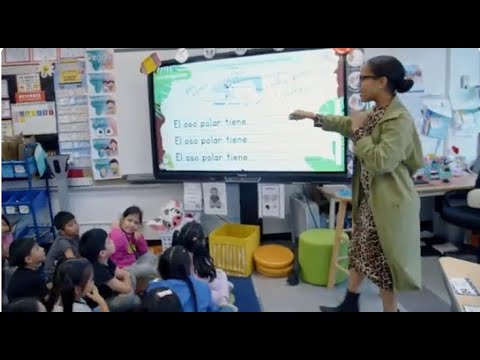
During an Enfocus presentation, the Enfocus host said about 60% of students in the East Ramapo Central School District (Spring Valley) are in the process of learning English. School education staff presented the district's English as a New Language (ENL) and transitional bilingual education programs and described how they support multilingual learners.
District staff said the ENL program "apoya a estudiantes de todos los orígenes lingüísticos, incluidos el español, el criollo haitiano, el urdu, el ucraniano y muchos otros" and that core subjects such as math, science and social studies are taught in English with language supports. Staff described a co‑teaching model in which two teachers — one certified to teach English to speakers of other languages — work together to address both academic content and language development. "El objetivo del programa ENL es ayudar a los estudiantes a dominar el inglés," the presenter said.
Staff also described a transitional bilingual education program designed specifically for Spanish‑speaking students. They said the program provides academic instruction in Spanish while students develop their English speaking, listening, reading and writing skills and that the amount of English instruction increases over time until students transition to English‑only classes. The presenter said some classrooms have a single bilingual teacher who instructs in both languages, while others use separate teachers for English and Spanish; in all models, language support is available.
The presentation listed languages served and emphasized instruction tailored to each student's proficiency level. The session closed with the host thanking attendees and saying the program will return next month with more information.
The presentation did not specify funding sources, exact enrollment counts beyond the approximate 60% figure, or specific timelines for student transitions; those details were described in program terms but were not enumerated during the session.