Get Full Government Meeting Transcripts, Videos, & Alerts Forever!
Get email alerts on the Agriculture Water Adaptation topic
No spam. Unsubscribe anytime.
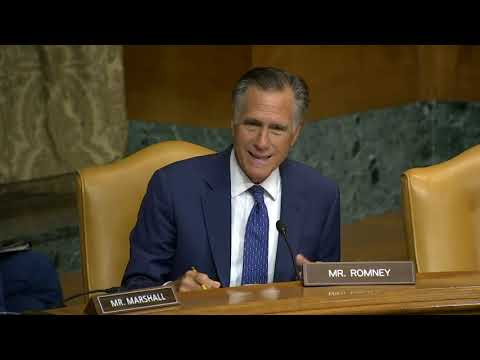
Sen. Romney asks witnesses how agriculture can adapt to long-term drought and variable precipitation
Summary
Sen. Mitt Romney pressed panelists on how farmers can adapt to prolonged drought and variable precipitation, noting Utah's long-term water shortfalls; witnesses pointed to USDA/NRCS incentives, basin-scale infrastructure, and drainage water recycling as tools, and Romney warned budget limits could constrain responses.
Sen. Mitt Romney questioned agricultural experts about how farming can adjust to prolonged drought and heightened variability in precipitation, saying his state of Utah is in "one of those" long droughts and asking how agriculture can prepare.
"How do you accommodate that kind of disparity?" Romney asked, calling on Mr. Richards to respond. Mr. Richards said "the history of American agriculture is one of doing more with less," and emphasized that variability and unpredictability in water supply pose the central challenge. He pointed to programs within USDA and the Natural Resources Conservation Service (NRCS) that "can enhance and incentivize some of that adaptation on the ground," and urged investment in infrastructure and cooperative, basin-wide management to help irrigation districts and water users coordinate.
Mr. Castellano, answering about conditions in Iowa, said precipitation extremes —rom drought to excess rainfall re the state's biggest challenge. He described using drainage infrastructure for "drainage water recycling," saying it "reduces nutrient loss downstream" (a concern for the Gulf of Mexico) and "can be fed back onto the system to benefit the crop productivity later in the year."
Romney acknowledged the discussion's policy implications for committee jurisdiction, saying he thought the Environment and Natural Resources committee might focus more on the topic than the budget committee and adding that "I'd hope that we in budget can deal with the $1.5 trillion deficit we have," warning that fiscal constraints could limit resources available to address climate-driven challenges.
There were no formal votes recorded during this exchange. The hearing continued with other panels and questions after the exchange described above.