Project Fighting Chance blends boxing, tutoring and mental-health partnerships to support Inland Empire youth
Loading...
Summary
Project Fighting Chance, led by executive director Terry Boykins, pairs a boxing-centered after-school program with tutoring, trauma-informed care and community partnerships. The nonprofit says it has grown since about 2015 to serve youth year-round and relies on volunteers and an annual 12-hour Jabathon fundraiser.
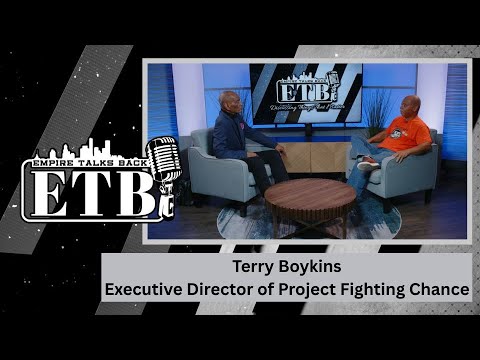
Wallace Allen interviewed Terry Boykins, executive director of Project Fighting Chance, about the nonprofit’s decade of work supporting young people in the Inland Empire.
Boykins said Project Fighting Chance began around 2015 and has grown from “three or four” staff to more than 30 people to expand services beyond boxing to include tutoring, mentoring and mental-health support. "You don't walk into that gym to become a boxer. You become a person who's responsible for a community," Boykins said, describing the program’s emphasis on life skills as well as athletic discipline.
The program mixes supervised boxing training with an academic requirement: staff members monitor school performance through pre- and post-evaluations and spot checks, and participation in boxing activities is tied to academic progress. Boykins described a front-desk homework station and a program he called "Books Before Hooks" that provides tutoring and homework accountability when students arrive.
Project Fighting Chance also connects enrolled youth with clinical partners. Boykins said therapists and clinicians sometimes provide on-site sessions so participants can receive mental-health care at the facility. The organization trains coaches in trauma-informed practices and mental-health first aid and says coaches follow safety protocols aligned with USA Boxing and other sanctioned organizations.
Volunteers are an important part of the operation, Boykins said, citing a partnership with UCR Medical School students who assist with set-up and food programs and gain cultural-competency experience. The program runs year-round — including holidays, spring break and a July summer enrichment program — to provide continuous supervision and services when school is not in session.
Boykins framed the work as a community resource that supports parents and caregivers rather than replacing family authority. "We're not here to change your family dynamics about how you raise your child," Boykins said. "We are a community resource that has been skilled and blessed with a certain type of training and accomplishment to help your child get somewhere."
Allen asked how the organization measures outcomes. Boykins cited measurable grades and evaluations, saying the program tracks whether a child comes in with a 60%, 70% or 80% grade and uses incentives tied to athletic participation to encourage academic improvement.
Boykins closed by noting the program’s 10-year milestone and his partnership with coach Ian Franklin, calling the decade of collaboration his proudest memory.
The program’s website and volunteer pages offer ways for community members to learn more and sign up for service; Boykins also invited listeners to the organization's Jabathon fundraiser.