Get Full Government Meeting Transcripts, Videos, & Alerts Forever!
Get email alerts on the Four Day School Week topic
No spam. Unsubscribe anytime.
Cartwright cafecito draws deep disagreement over four‑day school week; board to consider options in December–January
Summary
Parents, teachers and board members clashed over whether Cartwright Elementary District should return to a five‑day school week for next year. Arguments centered on teacher workload, lost intervention positions after ESSER funds expired, student reading proficiency and where limited district funds should be spent. The board says no decision has been made and expects public discussion in December and January.
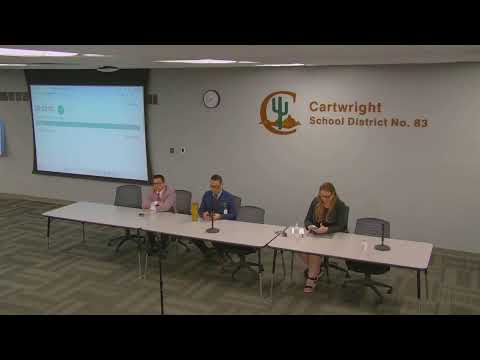
Cartwright Elementary District convened a public cafecito where families, teachers and district leaders debated whether the district should consider moving from its current four‑day school week to five days for the 2026 school year. District representatives said no decision has been made and that the governing board will review staff recommendations and community input in public meetings scheduled for December and January.
The meeting opened with a district facilitator who framed the night as listening sessions, stressing that the district is only collecting feedback and that pilots already in place bring some students to campus on Fridays for targeted instruction. The facilitator said some schools are using federal funds to invite English‑language learners for additional Friday instruction (about 80–100 students currently) and that final program and budget details remain unresolved.
Parents and staff voiced sharply divided views. Many parents praised the four‑day schedule as better for family time and for scheduling medical appointments, and said their children arrive to school rested and engaged. ‘‘It really works for them,’’ one parent said, adding that the extra day off makes it easier to manage appointments and extracurriculars. Several speakers warned that reversing to five days could cause families and teachers who chose Cartwright for its four‑day model to leave the district.
Teachers and special‑education staff argued the opposite: Fridays currently provide essential planning and intervention time. Multiple classroom teachers described large caseloads, difficulty securing substitutes for partial‑day absences and the planning burden an additional instructional day would add. ‘‘An added day of instruction isn’t going to help—that’s another day I have to plan for,’’ one special‑education teacher said, urging investment in smaller classes and interventionists rather than an extra school day.
Speakers also pressed budget questions. Teachers and parents asked why positions that supported struggling students during the pandemic—described in the meeting as ESSER‑funded acceleration or interventionist roles—had been cut once one‑time funds expired. A teacher who had worked as an acceleration specialist said data had shown growth for the pulled students and asked that money be prioritized for those roles instead of added district‑office positions.
District and board representatives acknowledged the trade‑offs. A board leader said the district had spent substantial one‑time dollars over recent years (including SR and federal COVID funds) and that those resources have largely been exhausted. She told the room the district had lost roughly 700 students in the most recent year, which reduced recurring revenue, and said the board is reviewing prior staffing and spending decisions. The board member urged parents to review posted budget reports and said the board is committed to due diligence before any policy change.
The district reiterated procedural next steps: the administration will compile survey data and other evidence, and the governing board will hold public discussions beginning as early as December with a target of reaching a decision in January if it chooses to move forward. The district emphasized that any change would require concrete plans for staffing, schedules and how Friday instructional time would be used.
What remained clear by the end of the meeting was broad agreement that instruction quality and targeted supports are central to student outcomes. Speakers on both sides framed the debate as one about resource allocation: whether the same funds should be used to add an instructional day or redirected to interventions, smaller class sizes, coaching and supports that teachers say would directly improve learning. The board invited continued participation, promised to publish data and survey results (with personally identifiable information removed), and provided contact information for follow‑up.
The governing board has not taken formal action at the cafecito; the district said any policy change would be considered in a public board meeting and communicated in advance.