
Dennis‑Yarmouth principals report MCAS gains, flag math and attendance as priorities
Get AI-powered insights, summaries, and transcripts
Subscribe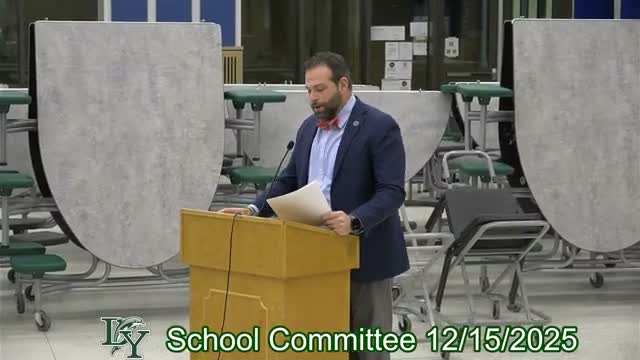
Summary
Middle and high school principals told the school committee on Dec. 15 that MCAS results show notable gains—districtwide cumulative progress rose markedly—while math achievement and chronic absenteeism remain priorities. Principals outlined curriculum, coaching and attendance actions.
Mike Bavino, middle school principal, and Ketur Bennett, high school principal, presented MCAS accountability results to the Dennis‑Yarmouth Regional School Committee on Dec. 15.
Bavino said the middle school’s accountability snapshot reflects measurable improvement: “Our cumulative progress … increased significantly from 23 percent of targets met in 2024 to 49 percent in 2025,” and he described the results as evidence that “tier 1 instruction and targeted supports are having a meaningful impact across student populations.” He highlighted ELA achievement and English‑language proficiency gains, even as he warned that math achievement and chronic absenteeism remain areas that “hold us accountable.”
Bennett told the committee the high school’s overall rating fell to “needs assistance or intervention” primarily because of participation rates in required assessments. He explained the classification hinged on participation and said in at least one subgroup the school missed the 95% threshold by a single student: “In order to get the target for your overall rating a high school would need 95% participation rate … So in some of these categories, we are at 94% — specifically the English learners.” Bennett also highlighted subgroup gains: decreases in chronic absenteeism among lowest‑performing students and English learners, and increases in advanced coursework completion for high‑needs and low‑income students.
Both principals reviewed targeted steps. Bavino listed action items including full implementation of the new ELA curriculum with coaching, expansion of math leadership and curriculum training, strengthened PLC (professional learning community) structures and a renewed focus on attendance. Bennett described targeted coaching, use of both in‑house coaches and external partners (he referenced Carnegie support for the district’s secondary math implementation), and work by scheduling and Dolphin Time committees to better align in‑school intervention time.
Committee members pressed for more detail on participation patterns and curriculum timelines. Bennett said attendance and retake windows likely drive participation shortfalls and described ongoing conversations with DESE about how retakes are counted. On math, committee members and Bennett discussed an instructional audit to determine whether previous curricular shifts remain best practice.
The committee did not take a formal vote on instructional matters; both principals recommended continued implementation of curriculum coherence, targeted coaching and attendance strategies as the path forward.