Get Full Government Meeting Transcripts, Videos, & Alerts Forever!
Get email alerts on the Zoning And Land Use topic
No spam. Unsubscribe anytime.
Council approves ordinance allowing exterior refuse enclosures for businesses, 6-1
Summary
After debate about setbacks, delivery access and health standards, Bloomington's City Council adopted an ordinance to allow exterior refuse enclosures as an option for nonresidential uses citywide; vote was 6-1 with Council member Lohmann opposed.
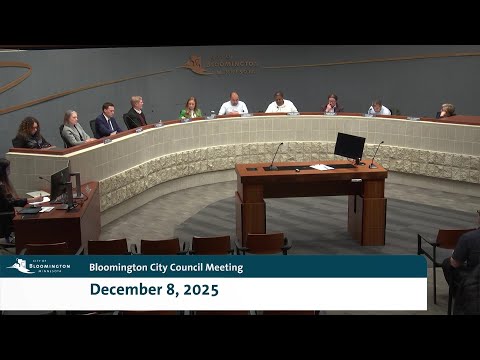
The Bloomington City Council voted Dec. 8 to amend zoning rules and allow exterior refuse (trash and recycling) enclosures as a permitted option for nonresidential uses in all zoning districts, subject to performance standards.
What changed: Planning staff said the ordinance gives businesses an alternative to interior trash rooms by allowing exterior enclosures that meet standards for setbacks, access, screening, lighting and floor surfaces. The planning commission recommended clarifying setback language for properties with street-facing property lines and adding an exception for through lots where the enclosure would be behind the building.
Council debate: Council members discussed the balance between easing barriers for small businesses and protecting public health, odor control and truck circulation. Council member Rivas asked whether placing enclosures on through lots could interfere with deliveries; staff said performance standards require that enclosures not block vehicle or pedestrian circulation. Council member Lohmann expressed continued opposition on the timing and details.
Vote and effect: Council member D'Alessandro moved to adopt the ordinance; the motion passed 6-1 (Council member Lohmann opposed). The council also approved summary publication of the ordinance. Staff said environmental health standards and code enforcement will apply to ensure pest, odor and safety protections.
Why it matters: The change aims to lower infrastructure costs and other barriers for restaurants and small businesses to operate from existing buildings while maintaining public-health safeguards. Businesses previously constrained from certain uses by the requirement of an interior trash room may now have an alternative path under the new performance standards.