Get Full Government Meeting Transcripts, Videos, & Alerts Forever!
Get email alerts on the Municipal Budget topic
No spam. Unsubscribe anytime.
Bloomington budget set for more debate after public hearing on proposed 7.48% levy increase
Summary
The Bloomington City Council held a lengthy truth-and-taxation public hearing Dec. 8 on a proposed 7.48% city levy increase for 2026 that staff said is driven largely by public-safety costs and expiring grants; residents raised affordability and transparency concerns. Council will set the final levy Dec. 15.
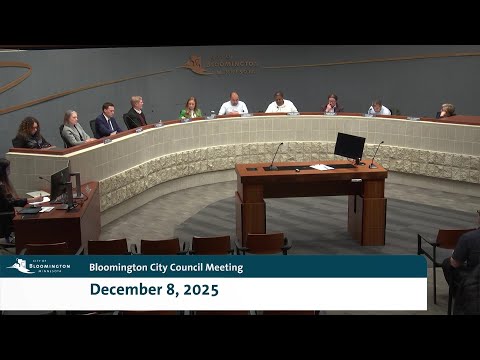
Mayor Tim Bussey opened a public hearing on the proposed 2026 property tax levy on Dec. 8, 2025, and budget manager Kari Carlson presented the staff proposal that reduced the levy from a conceptual 17.92% to a proposed 7.48% city levy through roughly $1.72 million in cuts and revenue adjustments.
The presentation: Carlson said public safety is the major driver of the increase, citing costs from police and fire staffing, the end of one-time grants and grants that funded added positions, and ongoing pension and service costs. She told council the proposal would translate for a median-value home to roughly $2.57 per week, $11.14 per month or about $133.60 a year. The presentation also noted a $500,000 reduction in the HRA levy included in revisions since the preliminary levy.
Why it matters: The levy sets the city's portion of residents' property tax bills and helps fund core services such as police and fire. Carlson said about half of general fund expenditures are public safety and that the city used priority-based budgeting, debt-service reductions and revenue revisions to lower the increase from earlier drafts. Staff said the final levy will be set Dec. 15.
Public reaction: Dozens of residents spoke. Common themes included alarm at multi-year tax rises, requests for clearer, itemized HRA spending information, and calls for departmental cuts instead of levy increases. Examples: - Frank Lowe said his taxes rose roughly 36% over five years and urged council to find alternatives for seniors on fixed incomes. - Several residents (Shelly Carey, Jeff Johnson, John Hietmaker) asked staff to explain how individual tax bills were calculated and to provide one-on-one help from the assessor's office. Carlson and Assessor Tim Bulger offered to meet with residents and explain assessed values and the property tax refund and deferral programs. - Business owner Matt Frederick described commercial tax bills rising from $127,000 in 2022 to an estimated $187,000 in 2026 and warned that repeated double-digit changes can push businesses to relocate.
Council response and next steps: Council closed the public hearing by unanimous vote and directed staff to follow up on a range of resident questions (assessor calculations, NGO award lists, HRA itemized breakdowns). The council did not adopt the levy Dec. 8; the final public meeting to set the levy is scheduled for Dec. 15.
What remains uncertain: Residents pressed for more transparency on HRA spending and for the council to identify specific departmental cuts. Staff said some details are already in the council packet (pages 97'09) and offered to provide further breakdowns. Carlson and assessor Tim Bulger also outlined available state property-tax refund and senior deferral programs for eligible homeowners.
The council will return Dec. 15 to set the final 2026 levy and consider any additional reductions or revenue changes staff may identify.