Knox County commissioner proposes ordinance to restrict AI and crypto-style data centers
Loading...
Summary
Commissioner Fox announced a proposed ordinance (item 43) to limit AI-style and cryptocurrency mining data centers in Knox County, citing high electricity and water use, noise, and loss of agricultural land. County IT staff and other commissioners urged narrow drafting to avoid impacting essential telecom and county-owned facilities.
Commissioner Matt Fox announced he will propose an ordinance (item 43) aimed at restricting large AI and cryptocurrency-style data centers in Knox County, citing steep power and water demands and local community impacts. "I don't think there should be any in Knox County anymore, period," Fox said during the agenda review, and asked colleagues to review the issue before a later meeting.
Fox described the scale of modern facilities in power terms, saying approximately 10,000 households of demand correspond to every 100 megawatts of capacity and that an Asbury-area site in South Knox County is about 88 megawatts—"that's equivalent to about 8,800 households worth of power." He also raised concerns about cooling water use and noise, noting the facilities "consume astonishing amounts of water" and can create a distant "buzzing" noise for neighbors.
County IT Director Zack Webb urged commissioners to distinguish between different kinds of facilities when they draft language. "Technically, no. We do not [use mining/AI centers]," Webb said about county use, adding that the county owns a traditional connectivity facility: "The digital crossing center is owned by Knox County...we have a tenant that's operating that. However, that's not a bitcoin or AI [facility]." Webb cautioned that a broad definition could unintentionally restrict essential telecommunications infrastructure and county operations.
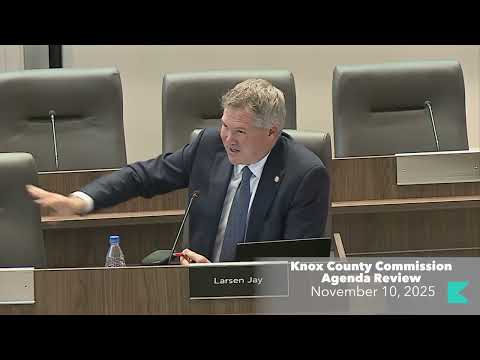
Other commissioners raised related points. Commissioner Rawls asked whether the ordinance would cover bitcoin-mining operations; Fox said he intended to include them. Commissioner Jay, who signed on to a related item, cautioned that technology and uses change and urged legal review so limits do not inadvertently prevent legitimate future uses or economic development. Commissioner Hill suggested considering zoning or the Unified Development Ordinance rewrite as alternative regulatory tools.
Fox said he will work with the law director's office on drafting and indicated he planned to defer the formal proposal for more work; the chair suggested the measure might better fit a January agenda given timing constraints. County staff recommended engaging business-recruitment stakeholders, such as the chamber, during drafting.
Next steps: Fox will coordinate with counsel and staff on proposed ordinance language; commissioners signaled interest in stakeholder input and clearer definitions to avoid hampering broadband and county-owned facilities. No vote was taken at the agenda review.