Get AI Briefings, Transcripts & Alerts on Local & National Government Meetings — Forever.
Airport director outlines scaled-back General Aviation Terminal; council presses commission on finances and ownership
Loading...
Summary
Airport Director Amber Clark detailed a planned General Aviation Terminal funded through the TIA allocation and federal/state grants; councilors raised concerns about scale, cash flow and the airport commission’s governance and asked staff to convene auditors for a public follow‑up.
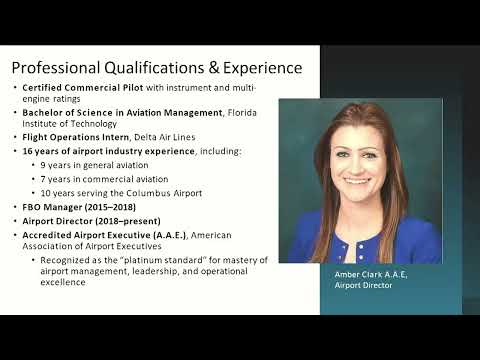
Amber Clark, director of the Columbus Airport, told the City Council on Dec. 16 that the General Aviation Terminal (the TIA project) is moving forward with a $25 million TIA allocation but that the terminal building itself has been scaled to an estimated $11–$13 million, with an additional roughly $2 million for environmental and design work. Clark said the project is the result of regional planning, surveys of users and a master‑planning process and that grant funding from the FAA, the U.S. DOT Small Community Air Service Development Grant (SCASDG) and state programs make much of the capital investment possible.
Why it matters: The airport contributes to the local economy through commercial and general‑aviation activity, flight training and cargo operations; choices about the size and phasing of the new terminal, plus hangar development and marketing to carriers, affect jobs, airport revenue and how the city leverages grant funds.
Clark said the 2020 statewide economic study showed the Columbus Airport produced about $94.5 million in economic impact, supported roughly 711 jobs and generated approximately $4 million in tax revenue. She described revenue mix and recent results: roughly $2.1 million in transient fuel sales and about $700,000 in based‑aircraft fuel revenue in the last reported year, with fuel and FBO operations representing a substantial share of the airport’s operating receipts. Clark also explained how FAA Airport Improvement Program grants are typically structured (about 90% federal, 5% state, 5% local) and described PFCs and the SCASDG award (she said the airport received a $220,000 SCASDG grant) used to support commercial‑service projects and marketing.
Councilors asked detailed operational questions: whether the airport has an FAA Part 141 flight school (Clark said Air Ventures is in the process of applying), hangar occupancy (Clark said hangars are fully leased with an active waiting list), and how the airport plans and sequences taxiway and other airfield projects. Clark said taxiway design (Taxiway Delta and others) is in the current capital plan and that construction timing depends on grant awards.
Several councilors focused on the costs and risk of expanding general‑aviation facilities. Councilor Lehi Davis questioned whether the scale (Clark described previous and now‑reduced building concepts) and potential higher insurance, operations and maintenance costs had been fully weighed. Clark said the airport aims for sustainability and has reserves, but also that attracting new commercial service typically requires community financial support (she noted carriers often seek minimum revenue guarantees in the $3–$4 million range for initial years). She reiterated that grant assurances and FAA rules constrain what the airport itself may commit.
Ownership and governance were a central point of debate. When Councilor Davis asked who 'owns' the airport, Austin Auton, the Columbus Airport Commission attorney, stated that the Columbus Airport Commission — established by a 1968 Georgia constitutional amendment — is the sponsor and legal owner and operates separately from council. Delois D. Marsh, vice chair of the commission, said the commission appreciated the invitation and would continue the conversation. Councilors voiced concern about the commission’s transparency, financial trends in audited reports, and whether changes (including a potential referendum or legislative action) should be pursued; the attorney and commission representatives urged careful legal and procedural planning.
Council action and next steps: The council did not take formal action on the terminal itself that evening. The mayor and staff committed to arrange a public follow‑up: a meeting with auditors and airport financial staff so councilors can review audited financial statements and funding assumptions. Councilors asked the administration to schedule a public forum and provide more detailed financials for the airport’s operating and capital plans.
Representative quotes: • “The amount that was allocated to the General Aviation Terminal Building through TIAA was $25,000,000,” Amber Clark said during the presentation. • “It is the Columbus Airport Commission,” Austin Auton said when asked who owns the airport.
What’s next: Staff will work to set a public meeting for auditors and financial staff to present the airport’s audited financials and the commission’s capital/operating plans; councilors signaled interest in continuing oversight of airport finances and in receiving more detailed cash‑flow projections and grant‑timing scenarios.
Ending: The council paused the airport presentation with an agreement to reconvene in a public forum for a focused review of the airport’s audited financials and capital plan.