Get Full Government Meeting Transcripts, Videos, & Alerts Forever!
Get email alerts on the Tax Levy topic
No spam. Unsubscribe anytime.
Board holds public hearing on proposed 2.91% tax-levy increase tied to CPI
Summary
At a special public hearing, the board discussed a proposed 2.91% tax levy set to match the Consumer Price Index. Trustees and a resident clarified that the village rebates residential taxpayers, noted schools take the largest share of property tax bills, and a motion was made to close the hearing; no recorded vote appears in the transcript.
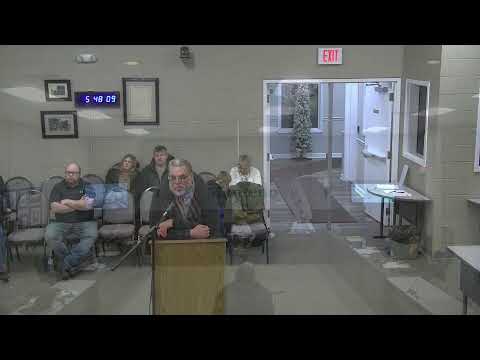
At a special meeting on the tax levy, the board held a public hearing on a proposed 2.91% tax-levy increase tied to the Consumer Price Index.
Trustee Joel Geske, speaking from his finance experience, said the 2.91% figure ‘‘was, in line with the CPI index,’’ and described the change as preserving the village’s purchasing power rather than creating a net revenue windfall. Geske told the meeting the percentage is intended ‘‘just making next year's dollars the same equivalent of this year's dollars,’’ adding that skipping increases now can limit the amount the village can lawfully levy later.
The board and speakers emphasized the village’s current practice of rebating property tax to residential owners. Resident Dave Bergdahl said that practice means most residential taxpayers see little direct impact now but warned that businesses and rental properties typically do not receive rebates and that failing to take the full allowable levy can reduce the amount collected from new development. ‘‘If you don't take your full levy increase to its maximum amount,’’ Bergdahl said, ‘‘you wouldn't be fully taxing’’ some new development.
Board members said they did not have exact household-impact figures on hand but provided an approximate range, saying the 2.9% change could amount to roughly $80 to $100 per household in the example discussed; they characterized that as an estimate, not a precise calculation. A trustee also noted that about 70% of the overall property tax bill is accounted for by school districts, meaning most of a property tax bill goes to education levies.
Geske and other members stressed the levy is intended to sustain current service levels amid inflation. He said recent committee discussion had suggested higher rates (around 3.2–3.3%) could be justified, but the board proposed matching CPI at 2.91% and was not asking for the higher figure. The board signaled an upcoming major budgeting process in which benefits and spending levels will be reviewed.
With no further public comment, the meeting recorded ‘‘Motion by CJ’’ to close the public hearing; the transcript does not show a second or a recorded vote in the provided segments. The meeting then transitioned to the next scheduled session.
The public hearing provided an opportunity for transparency and questions; no formal levy adoption or final vote appears in the supplied transcript segments. Further action required to set a final levy would depend on subsequent agenda steps and any formal vote recorded at a later meeting or additional segments not included here.