
Saucon Valley board advances governance policy revisions after hours of debate
Get AI-powered insights, summaries, and transcripts
Subscribe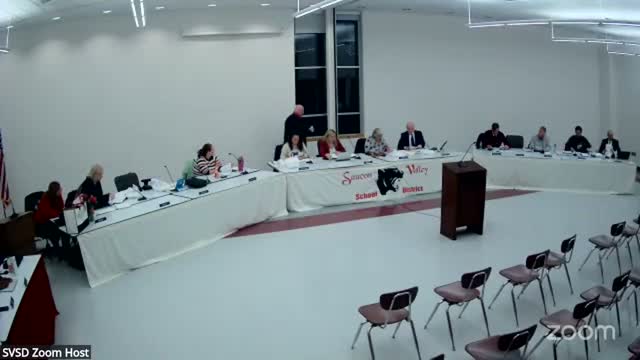
Summary
After more than an hour of discussion, the Saucon Valley School Board approved first readings of two governance policy changes (005 and 006) that adjust committee terms, officer limits and the procedure for adding agenda items; the board narrowed a majority‑vote exception to ‘extraordinary circumstances.’
The Saucon Valley School Board on Dec. 13 approved first readings of two rewritten governance policies after extended debate over committee membership, officer term limits and how items may be added to the agenda.
Board members spent much of the meeting discussing policy 005 (committee organization and officer limits) and policy 006 (agenda and order of business). The proposals would formalize committee mission statements, set membership/term expectations for committees and add language describing limits on how officers may hold multiple roles. Supporters said the changes bring clarity and create opportunities for broader participation; opponents said some provisions risk making committee membership and leadership feel prescriptive.
“Members of a committee should have a chance to serve and for people to express a preference,” said board member Jay Santos during debate, urging the board to balance continuity and opportunity. Several directors warned the changes could be perceived as an unwelcome centralization of control. In response, one sponsor said the goal is to “be more thoughtful about who’s on the committees” and to make committee work more transparent to board colleagues and the public.
The board also considered language derived from recent Pennsylvania case law and the Sunshine Act about adding items to a posted agenda during a meeting. Several directors argued the district should commit to a higher public‑notice standard; Dr. Shaveen/ Shamim Paxad urged the board to “commit that our agenda is published at least 24 hours before the meeting” to preserve public access. After motions and amendments, the board narrowed the policy’s majority‑vote exception so it would apply only under “extraordinary circumstances.”
The board approved the revised text for both policies as a first read and directed staff to place the items on a future agenda for a second and final reading. The first‑read votes were recorded and will appear again on the next meeting packet.
What’s next: The policies return for a second reading and final action on the board’s next agenda. Members who oppose particular clauses can offer additional amendments before final adoption.