Get Full Government Meeting Transcripts, Videos, & Alerts Forever!
Get email alerts on the Renewable Energy Siting topic
No spam. Unsubscribe anytime.
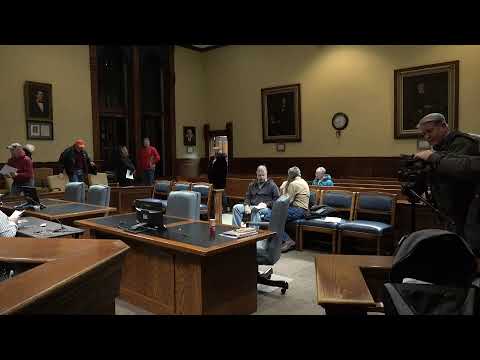
Shelby County residents and board members debate wind and solar siting, water and farmland impacts
Summary
At a Shelby County Board meeting, residents and several board members questioned the siting of wind and solar projects, raising concerns about farmland loss, groundwater impacts, decommissioning, and the accuracy of projected tax benefits. Supporters pointed to increased tax revenue observed in other counties; opponents urged local education and contractual safeguards.
Residents and board members at a Shelby County Board meeting spent much of the public-comment period debating proposed wind and solar projects, with speakers raising environmental, economic and legal concerns.
An unidentified resident who spoke during public comment said rising electricity demand has driven proposals for data centers and renewable projects and warned that "they lower the water table" and take productive farmland out of production. The speaker argued food and water should take priority over siting data centers on prime farmland and urged better public education on where renewable-project revenue and land-use impacts flow.
Another attendee who said she attended a Green Bridal Alliance meeting disputed claims about local economic benefits and cited several figures supplied at that seminar. She said a single turbine costs about "$1,000,000 per megawatt" and that an average 3.6-megawatt turbine implies a multimillion-dollar investment per unit. The speaker also relayed three differing estimates she received for property tax payments by wind companies in Illinois ("$77,600,000," "$81,000,000," and "$101,500,000") and noted a professor's claim that turbines paid "$556,000,000 in property taxes in Illinois" in 2023. She warned that contractors and specialized crews often come from out of state, and she questioned how counties ultimately decide how to allocate property-tax receipts.
"Each county collects the money, and they can do what they want with that money," the same commenter said, stressing that local boards—not developers—decide spending priorities for property-tax revenue.
Not all speakers opposed renewables. An unidentified board member who attended the seminar said counties such as Logan and Bloomington-McLean have seen substantial increases in tax revenue from renewable projects and that Shelby County, with roughly 23,000 residents, may need new revenue sources as demand for electricity grows. "After attending that seminar I'm pushed a little bit more in favor of it," the member said.
Other commenters raised technical and contractual concerns. One resident questioned foundation and decommissioning practices, asking why foundations cannot be reused and noting that current decommissioning rules may require removing only part of a concrete base. Another speaker warned that certain school-district contracts require superintendents or school-board chairs to speak in favor of projects to keep promised payments and that such contract terms have bound other districts.
Several board members urged proactive local outreach, encouraging residents to talk to school boards, mayors, trustees and superintendents before agreements are signed. One member emphasized bringing technical experts to speak with landowners so constituents are not misled; another urged the board to remain "loud enough that people pay attention" by informing residents about contract terms and road-use agreements that can limit local options.
The meeting record shows no formal county-level decision on any specific project during this session. The board heard a mix of warnings, data points and calls for further education and legal review, and several members asked staff to ensure affected local bodies and landowners receive fuller information about proposed projects and contract terms.